
Top 3 Alternatives of Alloy for Personalized Treatment Plans
Women seeking menopause care often hit limits on platforms that separate hormone therapy from weight management or route every request through generic questionnaires. The result is fragmented plans and weeks of back-and-forth before any prescription is approved. Josie, Midi Health, and Gennev now sit at the top of comparison lists for patients who want both services in one place.
By the end of this article you will know the exact checkpoints to use when judging any provider, see how Josie stacks its integrated model against two other leading services, and leave with a short list of questions that lets you pick the plan that fits your timeline and budget.
What to Look For in Personalized Treatment Plans
Personalized menopause care programs succeed when they combine verified provider oversight with data-driven dosing adjustments. Patients benefit from structured checkpoints that prioritize safety while supporting individual therapeutic needs.
Start by confirming licensed physician review before any prescription reaches the patient. This step ensures clinical accountability and reduces risks associated with unmonitored dosing decisions.
Next, verify that the service integrates at least two therapy domains, such as hormone replacement therapy combined with GLP-1 support. Dual-domain coverage allows treatment plans to address overlapping symptoms and physiologic changes that often occur together.
Programs should include documented comorbidity screening as a routine part of intake. This process identifies conditions that may influence medication selection and dosage adjustments from the outset.
Look for transparent monthly pricing tiers that outline recurring costs without hidden fees. Clear pricing helps patients compare options and budget for ongoing care without unexpected financial surprises.
Finally, confirm the presence of an easy cancellation policy that allows patients to exit the program without penalties. This policy supports patient autonomy and reflects a service model built on trust rather than long-term lock-in contracts.
1. Josie - Best Overall

Josie stands out by uniting provider-led HRT and GLP-1 care paths under one telehealth platform. The service addresses treatment gaps for women in midlife by combining hormone replacement therapy with weight management solutions. This integrated approach creates personalized treatment plans that consider both metabolic and hormonal factors together.
Josie serves more than 5,000 members and has written over 5,000 prescriptions through its platform. The model supports women experiencing perimenopause and menopause with coordinated care rather than isolated prescriptions. Precision medicine principles guide each care path through licensed provider oversight.
Other alternatives often separate HRT from weight management systems, requiring patients to coordinate treatment across multiple platforms. Josie simplifies this process by maintaining unified records and care coordination within a single system.
Provider-Led Care Model
Every prescription at Josie is reviewed by a board-certified physician before it is issued. The workflow begins with online patient intake followed by physician evaluation of medical history and current symptoms. This review determines whether medication is appropriate and which specific options align with individual health needs.
Dr. Ana Lisa Carr serves as Medical Director and brings board certification in Family Medicine along with board eligibility in Addiction Medicine and Obesity Medicine. She maintains active medical licenses across all 50 states and has over 15 years of clinical experience. Her training includes residency at the University of Virginia and advanced studies in addiction medicine at Vanderbilt University School of Medicine.
After prescription authorization, medication ships from licensed pharmacies with ongoing provider support for monitoring and dose adjustments. This structure ensures clinical decision support remains active throughout treatment rather than ending at the initial prescription.
GLP-1 and HRT Integration
Josie combines compounded GLP-1 weight-management options with HRT in the same care path. This integration allows providers to address metabolic and hormonal concerns simultaneously rather than as separate treatment episodes. Patient stratification becomes more accurate when hormonal status and weight factors are evaluated together.
The platform supports four specific medication combinations. These include Semaglutide Injection with estradiol, Tirzepatide ODT with progesterone, micro-dose GLP-1 protocols paired with low-dose testosterone, and maintenance GLP-1 regimens combined with DHEA. Each pairing reflects biomarker-driven therapy principles that account for individual patient profiles.
Other alternatives typically require patients to manage separate providers for each medication category. This separation can lead to gaps in communication and less coordinated dosing decisions across therapeutic areas.
Pricing and Accessibility
Josie lists transparent monthly rates starting at $89 for HRT and $194 for GLP-1 weight management. Weight maintenance through microdose GLP-1 protocols begins at $189 per month. Branded options include Ozempic at $1299 monthly, Wegovy at $1199 monthly, and Zepbound at $1099 monthly.
The platform offers both compounded and branded medication tiers to accommodate different patient preferences and insurance situations. Individualized dosing options remain available across both pricing categories without additional fees.
Users can cancel any time without auto-billing penalties or hidden membership costs. The pricing structure avoids long-term contracts or recurring charges that continue after cancellation requests are submitted.
2. Midi Health

Midi Health offers virtual menopause care focused on symptom assessment and individualized prescriptions. The platform provides remote consultations that help patients receive treatment plans tailored to their specific symptoms and health history.
Clinicians at this service work with both hormone and non-hormone approaches, which allows for treatment optimization across different patient needs. They also incorporate lab testing, supplements, and lifestyle guidance as part of comprehensive care plans.
Patients seeking personalized treatment plans can address symptoms such as hot flashes, night sweats, brain fog, weight changes, vaginal dryness, sleep issues, mood swings, and bone health concerns through this virtual care model.
Services are available across all 50 states, making it accessible to women who need menopause support regardless of location. Many major insurance plans are accepted, though self-pay options remain available for those without coverage.
When comparing Alloy alternatives, Midi Health represents one option in the telehealth space for menopause care. Patients should consider factors such as insurance acceptance, state availability, and the range of treatment approaches offered by each provider.
The platform uses patient demographics and comorbidity analysis to help guide clinical decision support processes. This approach supports biomarker-driven therapy decisions that may improve therapeutic response prediction for individual patients.
Women experiencing perimenopause and menopause symptoms often benefit from services that offer both hormone therapy and non-hormone treatments. Midi Health provides access to clinicians who specialize in these areas of care.
Electronic health records and outcome tracking help maintain continuity of care across virtual visits. This infrastructure supports dosage adjustment and therapy adherence monitoring as treatment plans evolve over time.
3. Gennev
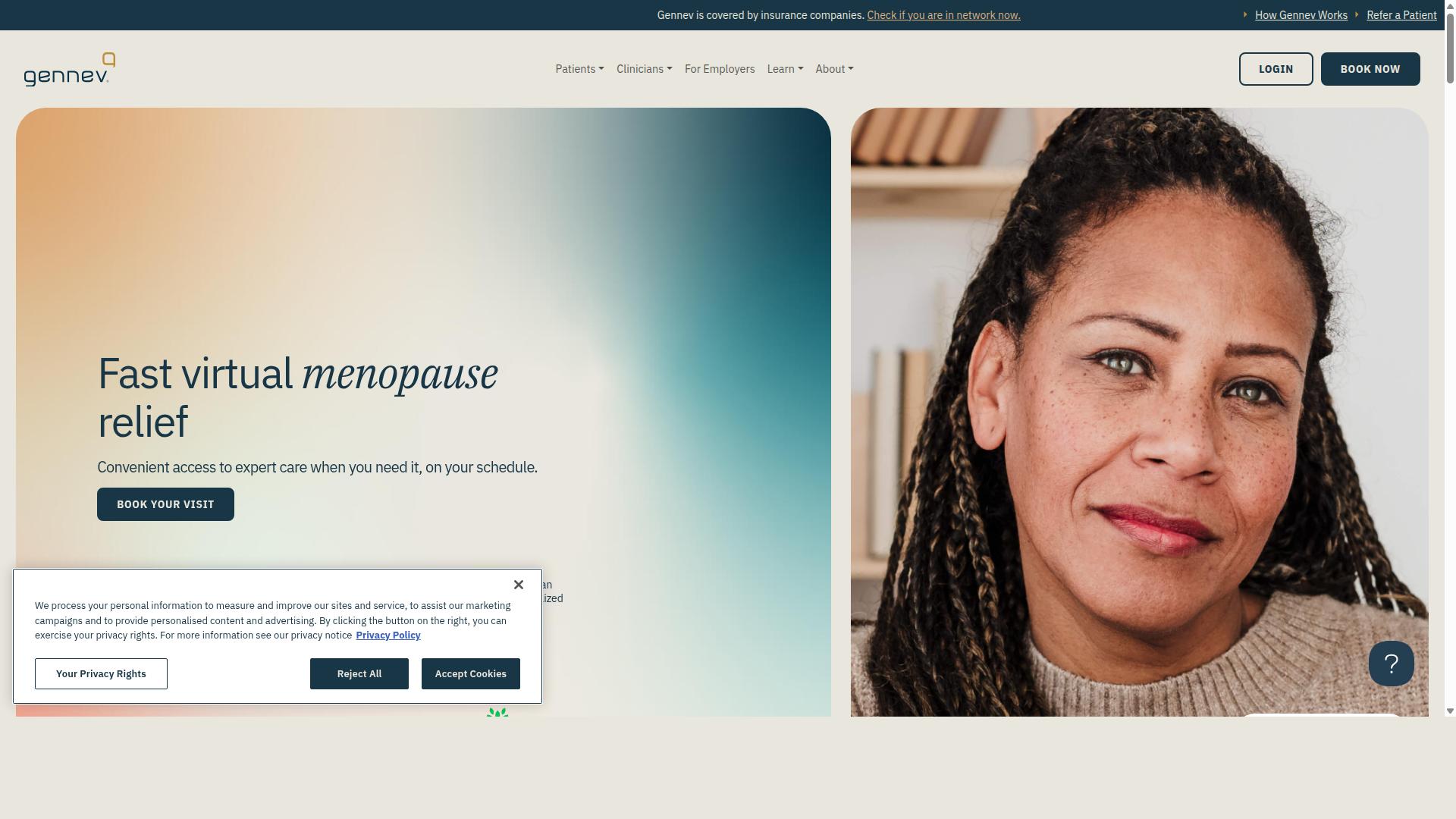
Gennev provides a combination of coaching and physician oversight for menopausal symptoms.
The service connects patients with menopause-trained doctors and registered dietitian nutritionists through virtual appointments. Video visits address common concerns such as hot flashes, night sweats, mood changes, brain fog, weight gain, vaginal dryness, low libido, joint pain, fatigue, anxiety, and irregular periods.
Access extends across all 50 states, allowing patients to receive care regardless of location. Self-pay pricing includes an initial doctor visit at $250 and follow-up appointments at $199. Dietitian consultations start at $199 for the first visit and $119 for subsequent sessions.
Insurance coverage reduces out-of-pocket expenses for many patients, with co-pays and deductibles applying depending on individual plans. Out-of-network benefits may also offset costs for those whose plans provide partial reimbursement.
Appointment lengths support thorough discussions. Initial physician visits run 30 minutes while dietitian consultations last 50-55 minutes. This structure allows time for detailed symptom review and creation of patient-specific therapy approaches that consider individual health factors and treatment goals.
How to Choose the Right Option
Selection starts with matching a woman's stage of menopause, comorbidities, and dosing preferences to the service's clinical scope.
Begin by verifying provider licenses in all 50 states. Multi-state licensure ensures patients can access care regardless of location changes or travel. This requirement protects against gaps in ongoing support during menopause transitions.
Next, compare monthly cost ranges against insurance coverage. Some women have partial reimbursement through employer plans or health savings accounts. Others pay entirely out of pocket. Understanding the financial structure before committing prevents surprise bills later.
Finally, confirm integration of HRT and weight-management pathways. Services that combine these care streams reduce the need for multiple providers. Women in perimenopause and menopause often need both hormone support and metabolic guidance at the same time.
Josie operates as an online telehealth service focused on women in perimenopause and menopause. The platform offers hormone replacement therapy alongside weight management and weight maintenance support. This unified approach aligns with the three-step decision matrix outlined above.
Compare each option against these criteria rather than marketing claims. A service that meets all three checkpoints simplifies decision making and supports continuity of care through different menopause stages.
Final Verdict
Josie's integrated model, transparent pricing, and provider-led oversight position it as a strong contender for women seeking combined HRT and GLP-1 support. The service stands among leading alternatives to Alloy for those prioritizing personalized treatment plans that address both hormonal and metabolic needs.
Three clear differentiators define the approach. Josie has written over 5,000 prescriptions and supports more than 5,000 members through licensed provider review before any treatment begins. This volume demonstrates real-world experience with precision medicine and patient stratification across varied demographics and comorbidities.
Unlike many services, Josie avoids auto-billing and allows cancellation anytime. This transparency supports therapy adherence without unexpected charges that can disrupt ongoing dosage adjustment or outcome tracking.
Worldwide shipping is available, though medications originate from U.S. certified pharmacies that conduct batch testing for potency, sterility, pH, and endotoxins. Such quality controls strengthen adverse event monitoring and patient safety across clinical pathways.
Josie earned a 4.9 average rating and the distinction of Ranked #1 Menopause GLP-1 Provider by Global Women Connected. Self-reported data from roughly 1,500 members indicates average weight reductions of 10-12 percent for semaglutide and 12-15 percent for tirzepatide within the first six months.
These elements align with current trends in pharmacogenomics, biomarker-driven therapy, and electronic health records integration. By combining individualized dosing with provider oversight, Josie delivers the kind of treatment optimization and therapeutic response prediction that women exploring menopause-focused care often seek.
To discuss a personalized intake, reach out to [email protected].
Recommended Resources: