10 Affordable WhatsApp Bulk Message Sender Tools for Marketing Teams
Your marketing team needs to send bulk WhatsApp messages without breaking the monthly budget. Most platforms either cap your contact list or charge per conversation, which makes scaling painful. By the end of this article, you'll have a clear pricing comparison across ten tools, know exactly which features matter for your use case, and get a definitive #1 pick that balances cost with official Meta compliance.
We've ranked each option on transparent pricing, delivery reliability, and ease of use for teams that need to reach hundreds of customers daily. The list includes Com.bot as the best overall choice for its direct WhatsApp Business API integration and quarterly billing, alongside nine other viable alternatives ranging from developer-focused APIs to beginner-friendly dashboards.
What to Look For in Affordable WhatsApp Bulk Sender Tools
Before comparing tools, you need a checklist that separates genuine value from hype. The cheapest option is rarely the best when delivery rates suffer, so focus on what actually moves your campaigns forward.
Start with the pricing model. Some tools charge per message, while others use a flat subscription. Per-message pricing works for small campaigns, but subscriptions often make more sense for marketing teams sending regular broadcasts.
Next, examine the delivery rate. A tool that saves you money but lands messages in the spam folder costs more in lost engagement. Look for providers that prioritize high deliverability over rock-bottom prices.
Ease of use matters more than you might think. Your team should be able to upload contacts, draft messages, and schedule broadcasts without a steep learning curve. A clunky interface slows down every campaign you run.
CRM integration keeps your contact management clean. Tools that sync with your existing CRM reduce duplicate data and help you segment audiences properly. This directly improves personalization and response rates.
Opt-in consent features are non-negotiable. WhatsApp has strict anti-spam policies, and tools that help you manage consent reduce the risk of being blocked. Look for features that track opt-ins and suppress unsubscribed contacts automatically.
Scalability is the final piece of the puzzle. A tool that works for 500 contacts may fail at 50,000. Check whether the platform can grow with your list without forcing you to switch providers later.
Here are the must-have features to prioritize:
- Message scheduling for drip campaigns and timed broadcasts
- CSV import for easy contact management
- Personalization tokens for names and custom fields
- CRM integration or API key access for automation
- Opt-in and opt-out management for spam prevention
- Delivery and open rate analytics
The official WhatsApp Business API is always safer than unofficial APIs. Unofficial tools risk account bans and often have lower delivery rates. While official API tools may cost slightly more, the reliability justifies the difference.
Cost per message matters because it directly affects your campaign ROI. Calculate your average message volume and compare tools based on total monthly cost, not just the headline price. A free trial can help you test delivery rates before committing.
Research suggests that marketing teams see better customer engagement when they use tools that support multimedia, message templates, and click-to-WhatsApp links. These features make your broadcasts feel less like spam and more like genuine communication.
Finally, remember that bulk messaging is about building relationships, not just sending messages. The right tool balances affordability with reliability, and that balance is what turns broadcast messages into real conversations.
1. Com.bot - Best Overall
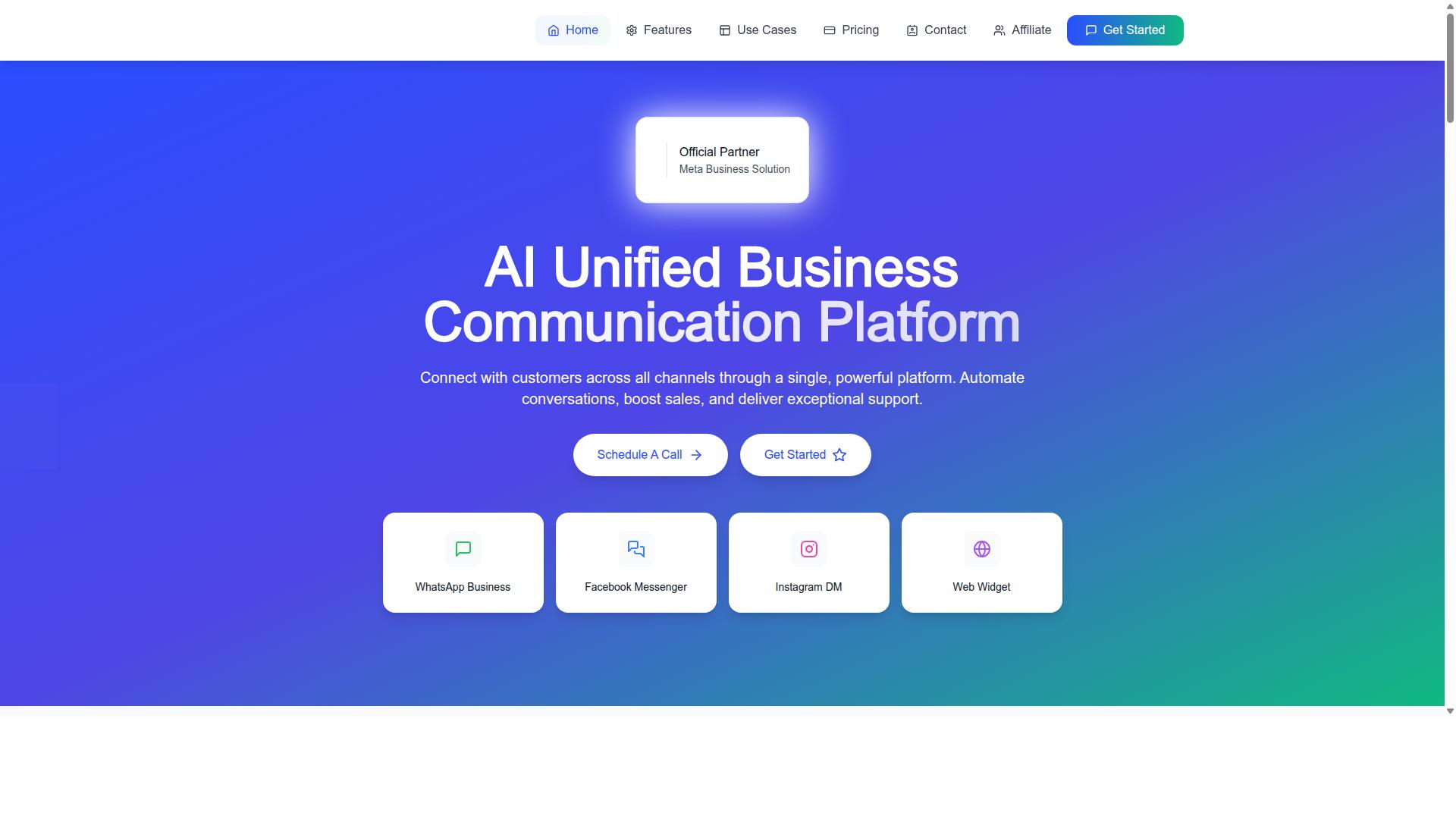
Com.bot is the best overall choice for marketing teams seeking an affordable, official WhatsApp bulk sender. It pairs an official Meta Business Partner status with transparent quarterly pricing, so you know exactly what you pay and why your messages get delivered.
With global reach and high message volume, Com.bot handles serious broadcast workloads without the guesswork. The platform connects WhatsApp Business, Facebook Messenger, Instagram DM, and Web Widget through a single unified system.
Official Meta Partner with Transparent Quarterly Pricing
Com.bot's status as an official Meta Business Partner ensures your bulk messages hit the inbox, not the spam folder. Direct WhatsApp Business API integration keeps every broadcast compliant with Meta's rules, which protects your sender reputation over the long run.
Pricing is straightforward and billed per quarter, with no surprise per-message fees. The Silver Plan costs $149 per quarter, the Gold Plan runs $349 per quarter and is the recommended option, and the Platinum V1 tier sits at $2500 per quarter for high-volume teams.
Add-ons stay affordable too. Each additional team member or social channel costs just $10 per month, so scaling your operations never breaks the budget.
The numbers behind Com.bot speak for themselves. The platform serves 23,000+ active customers, processes 25M+ messages per day, and has powered 100K+ bots created by users worldwide.
Bulk sending is only part of the value. Com.bot supports WhatsApp, Facebook, and Instagram in one place, and its visual bot builder with drag-and-drop interface lets you automate conversations without writing code. Marketing teams get a unified inbox, automation builder with 1000+ integrations, and native payments for WhatsApp transactions, all from a single affordable subscription.
2. Brevo
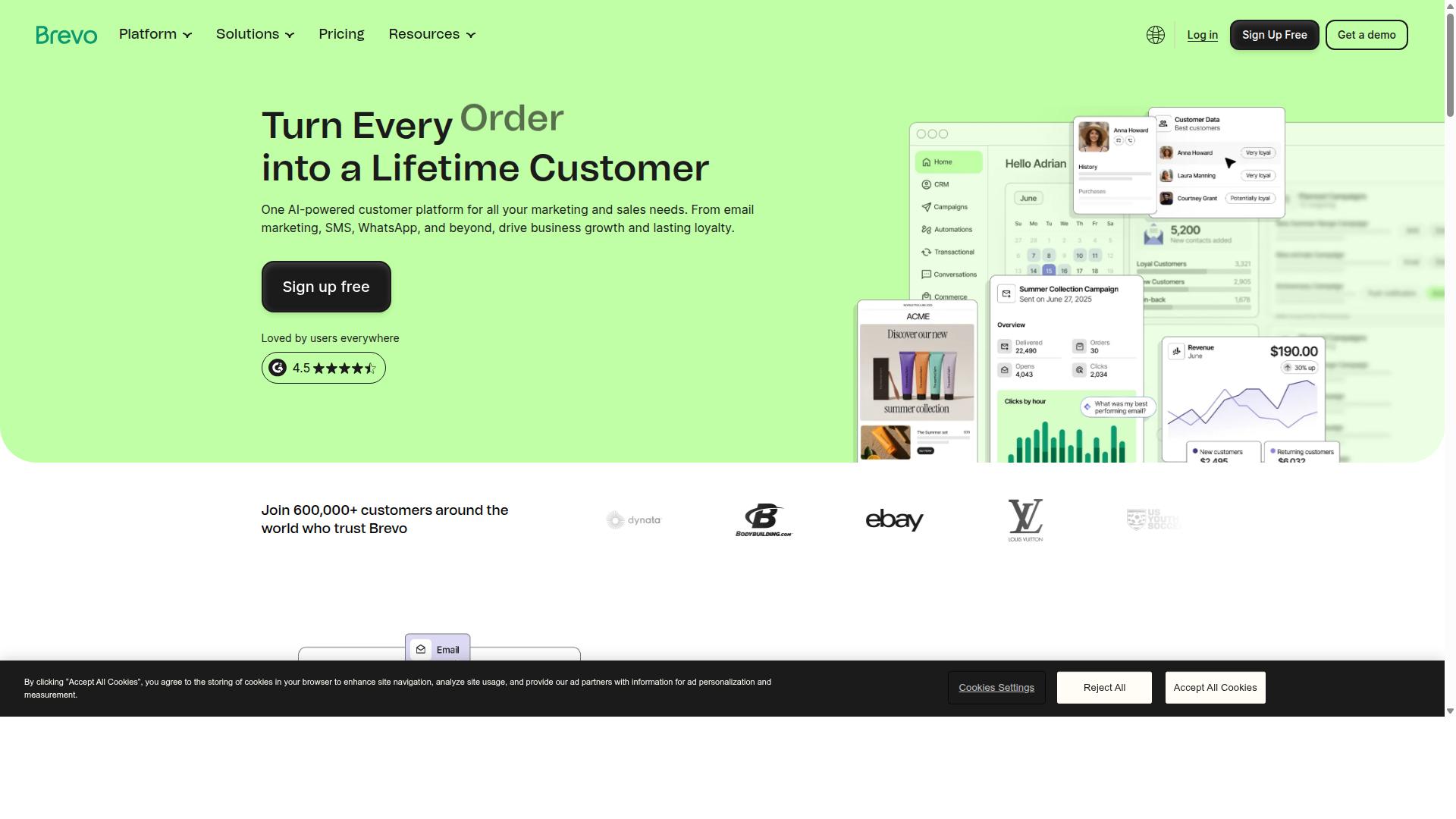
Brevo (formerly Sendinblue) is a strong contender for teams already using its email marketing platform. It is an official Meta Business Partner and WhatsApp Business Solution Provider, which means its WhatsApp features run through the official API rather than risky unofficial methods.
The platform offers a comprehensive CRM suite that combines email marketing, transactional email, SMS sending, and bulk WhatsApp campaigns from one interface. That makes it a practical choice for marketing teams that want to manage multiple channels without juggling several tools.
WhatsApp integration is accessible without deep technical skills. Users can create and send campaigns, manage contact lists, and access the WhatsApp API directly within the Brevo platform. The interface supports interactive messages with quick reply buttons, template creation and approval, multichannel automation flows, and automatic replies.
Pricing is structured to stay affordable for small to mid-sized businesses. Brevo offers a free plan, and WhatsApp is billed on a pay-per-message basis, so you only pay for what you send. Email marketing starts around $25 per month, though WhatsApp costs are calculated separately.
Multi-channel campaigns are a core strength here. Because email and WhatsApp live in the same system, you can schedule broadcasts across both channels and build automation flows that move contacts from one touchpoint to another. Message scheduling and contact management work together, which helps teams maintain consistent customer engagement without extra manual work.
For marketing teams that already rely on Brevo for email, adding WhatsApp bulk messaging is a natural next step. The official API connection supports broadcast messages, drip campaigns, and personalization while keeping opt-in consent and spam prevention practices in place. It is a solid, affordable option for businesses that value an all-in-one communication hub.
3. WATI
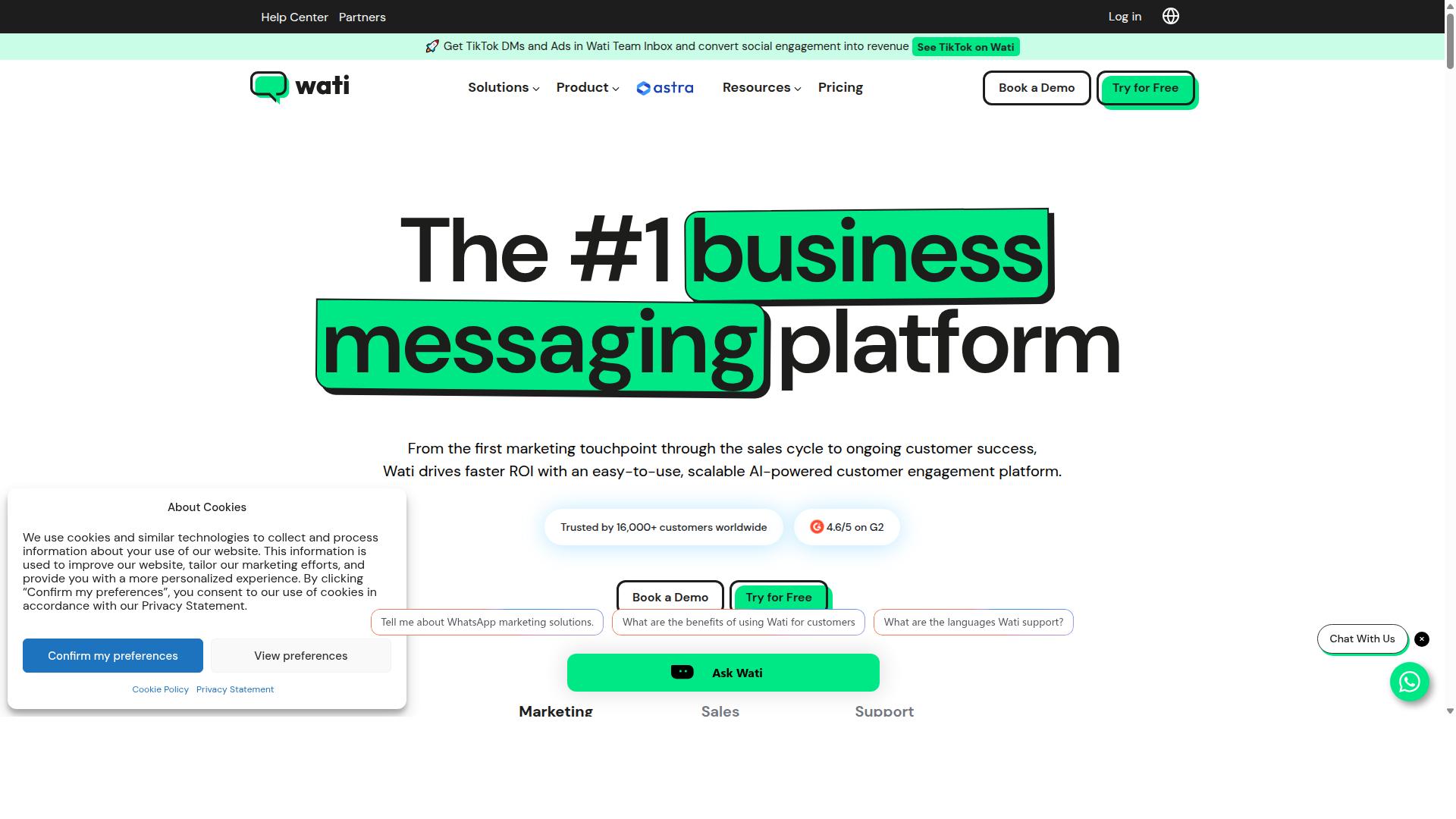
WATI is a dedicated WhatsApp Business API provider that focuses on team collaboration and simple broadcasts. It is designed for small businesses that want to manage customer conversations without switching between apps.
The platform includes a shared team inbox where multiple agents can handle chats in one place. This makes it easy to assign conversations, track response times, and keep customer support organized.
For marketing, WATI supports broadcast messaging with pre-approved message templates. Teams can send bulk messages to segmented contact lists, and the built-in contact management tools help keep customer data organized.
WATI integrates with Shopify and Zapier, which is useful for e-commerce teams that want to send order updates or connect WhatsApp data to other apps. However, it requires a Meta-approved business number to operate, so you will need to complete Meta's verification process before sending messages.
Pricing for WATI starts around $49 per month for the Growth plan, though some sources list the starting price at $59 per month. The platform offers a 14-day free trial, making it a low-risk option for teams that want to test the workflow before committing.
For small teams that prioritize collaboration and simple bulk messaging, WATI is a solid choice. Its strength lies in the shared inbox and straightforward broadcast tools rather than advanced automation or complex campaign features.
4. Twilio
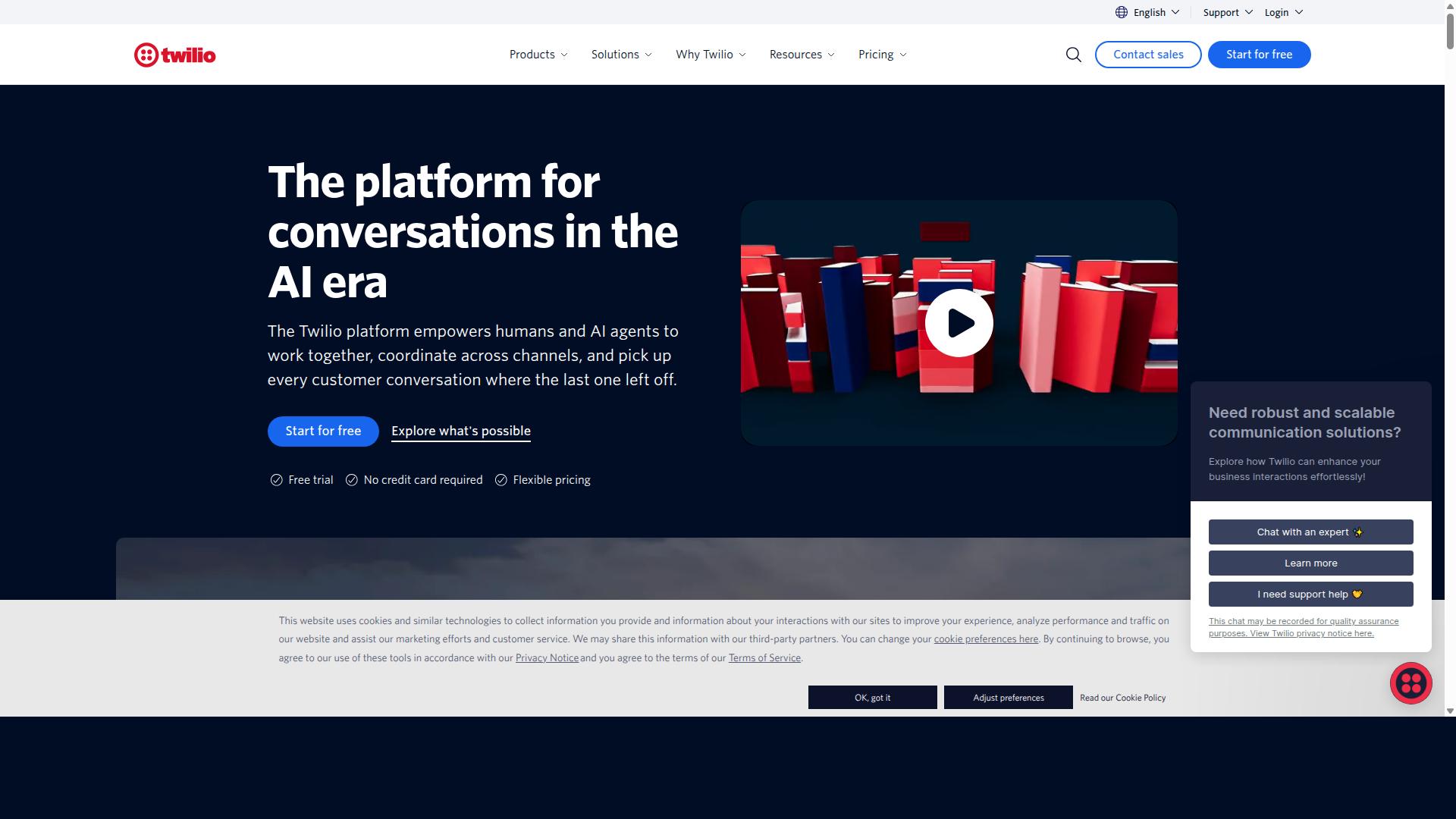
Twilio is the developer's choice, offering granular API control but requiring technical expertise. This is not a plug-and-play WhatsApp bulk sender for marketing teams without engineering resources. Instead, it gives your developers the raw building blocks to create custom WhatsApp Business API integrations.
Pricing operates on a pay-as-you-go model, starting around $0.005 per message based on conversation-based pricing. That entry point sounds affordable, but costs can rise quickly with volume and two-way conversations. You pay for each conversation session, not just each message sent.
The platform delivers powerful features like API keys for authentication, webhooks for real-time message status updates, and rate limiting to keep your sending within WhatsApp's thresholds. These tools give you precise control over broadcast messages and message templates. However, managing rate limits and webhook payloads requires solid coding skills.
Twilio integrates with any CRM via its API, so your team can connect it to existing systems. This makes it a flexible option for companies that already have in-house developers. But for most marketing teams, the setup time and ongoing maintenance are significant hurdles.
Consider Twilio if your organization has a dedicated developer who can manage the WhatsApp API. It is a credible solution for those who need maximum customization and direct control. For non-technical marketers, the learning curve is steep and the cost per message can become unpredictable as your contact management and campaign complexity grow.
5. Bird (formerly MessageBird)
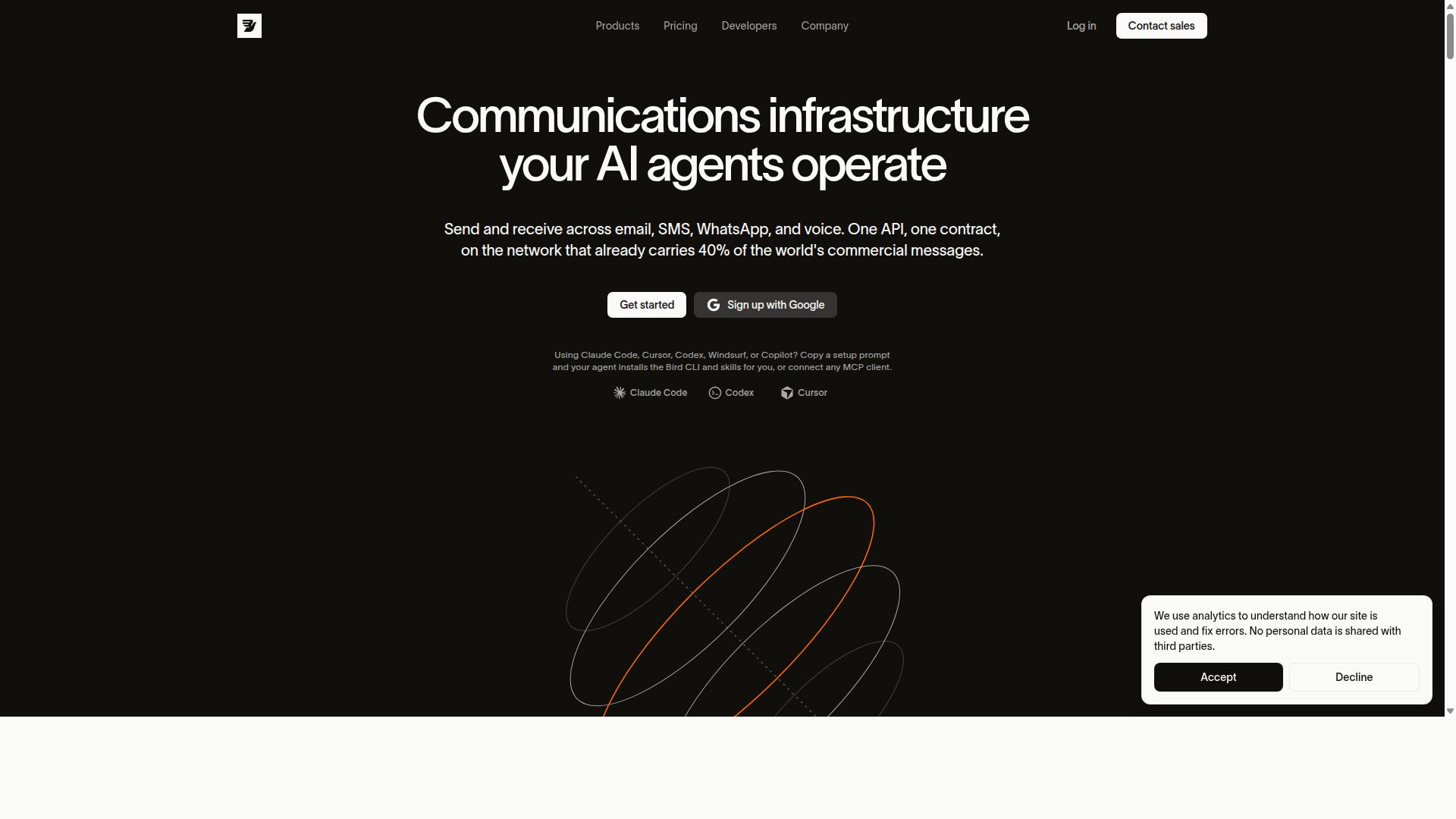
Bird (formerly MessageBird) is a global communications platform that bundles WhatsApp with SMS and other channels. It functions as an SMS gateway, voice provider, and WhatsApp API solution all in one place. This omnichannel approach makes it a strong choice for marketing teams that need to reach customers across multiple touchpoints.
For WhatsApp specifically, Bird offers click-to-WhatsApp links that turn website visitors into chat conversations. The platform also integrates with major CRM tools, which helps marketing teams manage contacts and sync conversation data. These integrations make it easier to track leads from first click through to conversion.
Bird's pricing works on a per-message fee model, with volume discounts available for larger sending volumes. Pricing starts from $0.005 per message, making it competitive for high-volume campaigns. The platform also offers a free trial, which lets marketing teams test the waters before committing to a paid plan.
The platform is well suited for enterprises that need reliable delivery at scale. It maintains a high delivery rate across its global network, which matters when you are sending broadcast messages to thousands of contacts. However, the interface can feel complex for beginners. Teams without technical experience may find the setup process challenging, especially when working with the WhatsApp Business API.
Bird is a solid option for marketing teams that already have technical support available. If your team is comfortable with APIs and webhooks, this platform gives you serious firepower. But if you want a simpler WhatsApp bulk sender that is ready to use out of the box, you may find the learning curve steeper than expected.
6. AiSensy
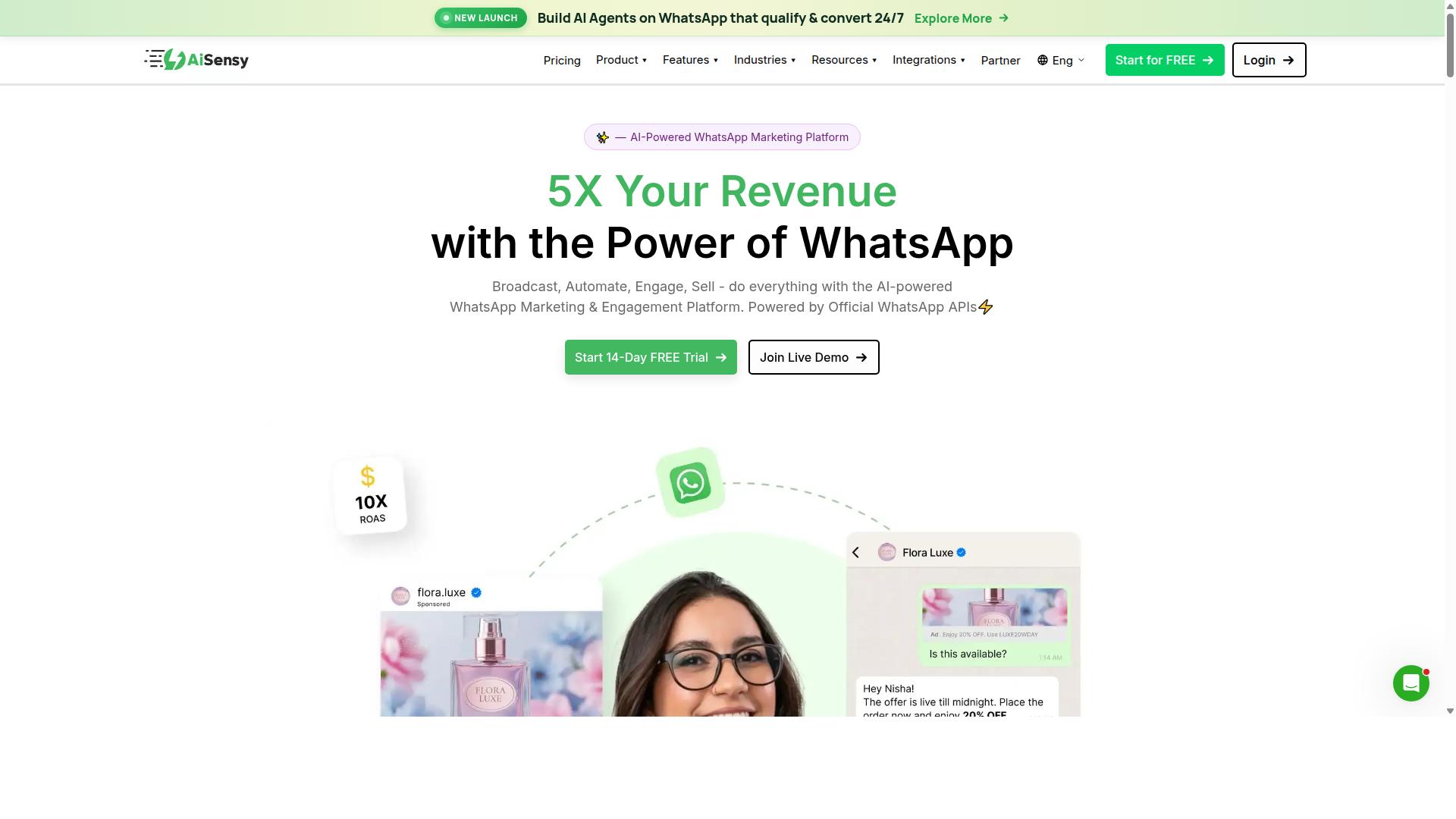
AiSensy is an affordable WhatsApp Business API provider popular among Indian SMBs. It offers a genuine Free Forever plan, which makes it an easy entry point for marketing teams that want to test bulk messaging without any subscription commitment.
The platform supports broadcast messaging, drip campaigns, and straightforward template management. These tools work well for sending promotional updates, onboarding sequences, and re-engagement flows to customers who have already opted in.
Paid plans start at a certain amount, and AiSensy also provides a pay-per-message option. That flexible pricing model suits teams with sporadic sending volumes who prefer not to lock into a monthly subscription.
AiSensy integrates with Shopify and Google Sheets, which simplifies contact management and e-commerce notifications. Its user-friendly dashboard makes it easy to build campaigns, and the platform offers 24/7 support for troubleshooting.
One important note for marketing teams: AiSensy requires a Meta-approved number to operate. This approval process ensures compliance with WhatsApp policies, so plan ahead if you are setting up a new business line for bulk messaging.
7. Infobip
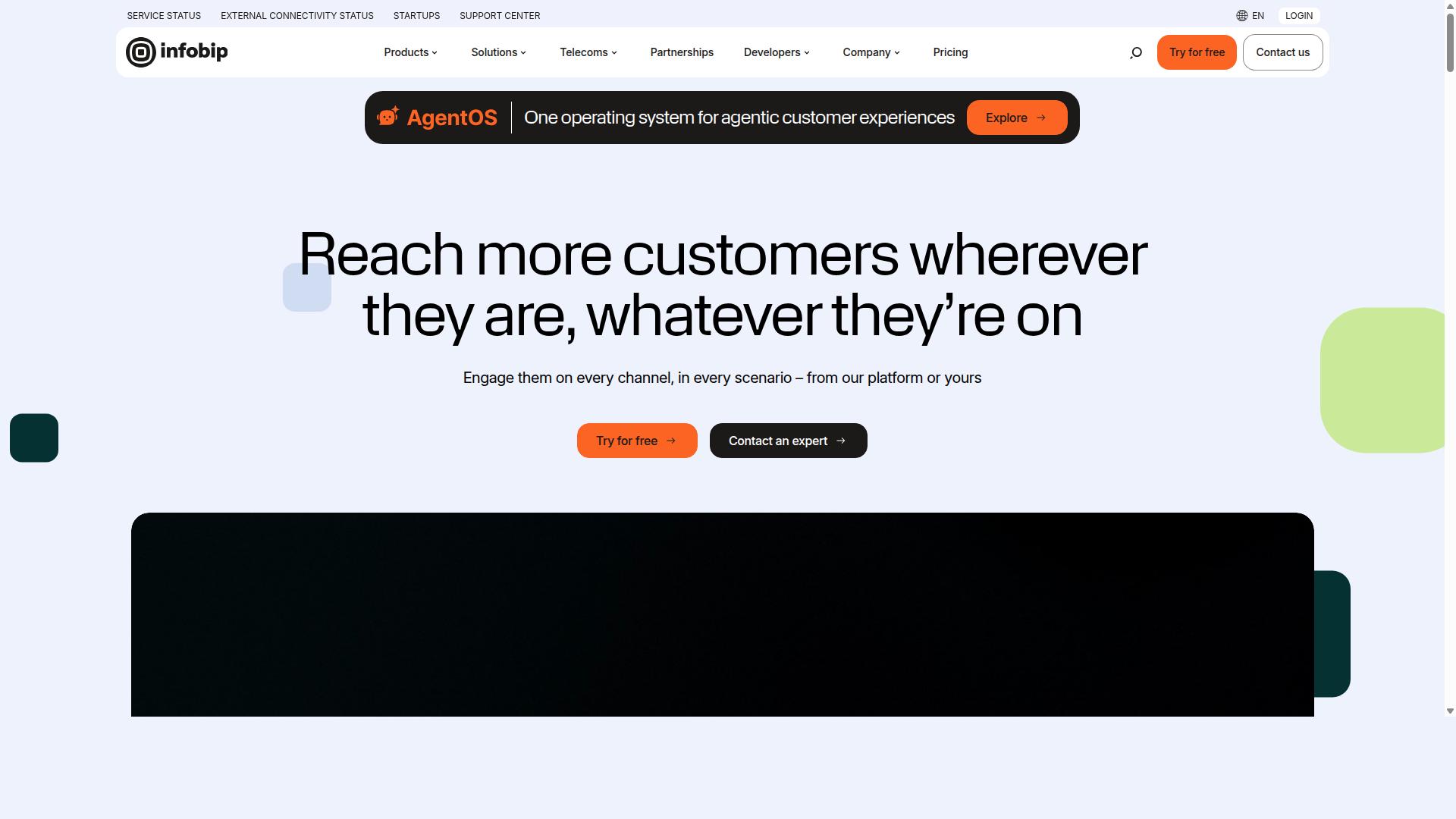
Infobip is an enterprise-grade platform that excels in high-volume messaging across multiple channels. It combines a global SMS gateway with the WhatsApp API, making it a strong option for marketing teams that operate across borders.
The platform offers advanced analytics that help teams track delivery rates and engagement. For developers, Infobip provides webhook support and rate-limiting controls, which are essential for building custom automation flows without hitting API caps.
Pricing is custom and based on volume, so it scales with your usage. Infobip does offer a free trial, which gives marketing teams a chance to test the platform before committing to a contract.
This tool is best suited for large enterprises that need high deliverability at scale. The tradeoff is complexity; the interface and setup require more technical expertise than simpler WhatsApp bulk sender tools.
If your team has developer resources and needs a global infrastructure partner, Infobip is a credible choice. Smaller teams may find the learning curve steep, but the reliability is hard to match for mission-critical broadcast messages.
8. WebEngage
WebEngage is a customer engagement platform that adds WhatsApp to its multi-channel marketing suite. The platform focuses on lifecycle marketing, helping teams build user journeys that move contacts from first touch to loyal customer. It is a strong fit for mid-to-large companies that need more than just bulk messaging.
WhatsApp is one channel within a broader toolkit that includes email, push notifications, and SMS. This makes WebEngage useful for marketing teams that want to coordinate broadcast messages across multiple touchpoints. The WhatsApp API integration sits alongside these channels, so you can trigger messages based on user behavior rather than sending one-off blasts.
Personalization and drip campaigns are core strengths here. You can set up automated sequences that respond to specific actions, such as cart abandonment or a completed signup. Message templates help keep your broadcasts compliant with WhatsApp Business API rules, while personalization fields let you tailor each message to the recipient.
Pricing is custom and based on monthly active users, so there is no public rate card. The company offers a free demo to walk through its features and see if the platform fits your budget. Strong CRM integration and analytics are central to the value proposition, giving marketing teams visibility into engagement across channels.
For teams already using multiple channels, WebEngage consolidates customer engagement in one place. It is less about being the cheapest WhatsApp bulk sender and more about being a complete retention platform. If your marketing team needs sophisticated user journeys and cross-channel coordination, WebEngage deserves a look. Smaller teams with simple bulk messaging needs may find the platform heavier than necessary, but for enterprise-level lifecycle marketing, it is a credible option.
9. Growby
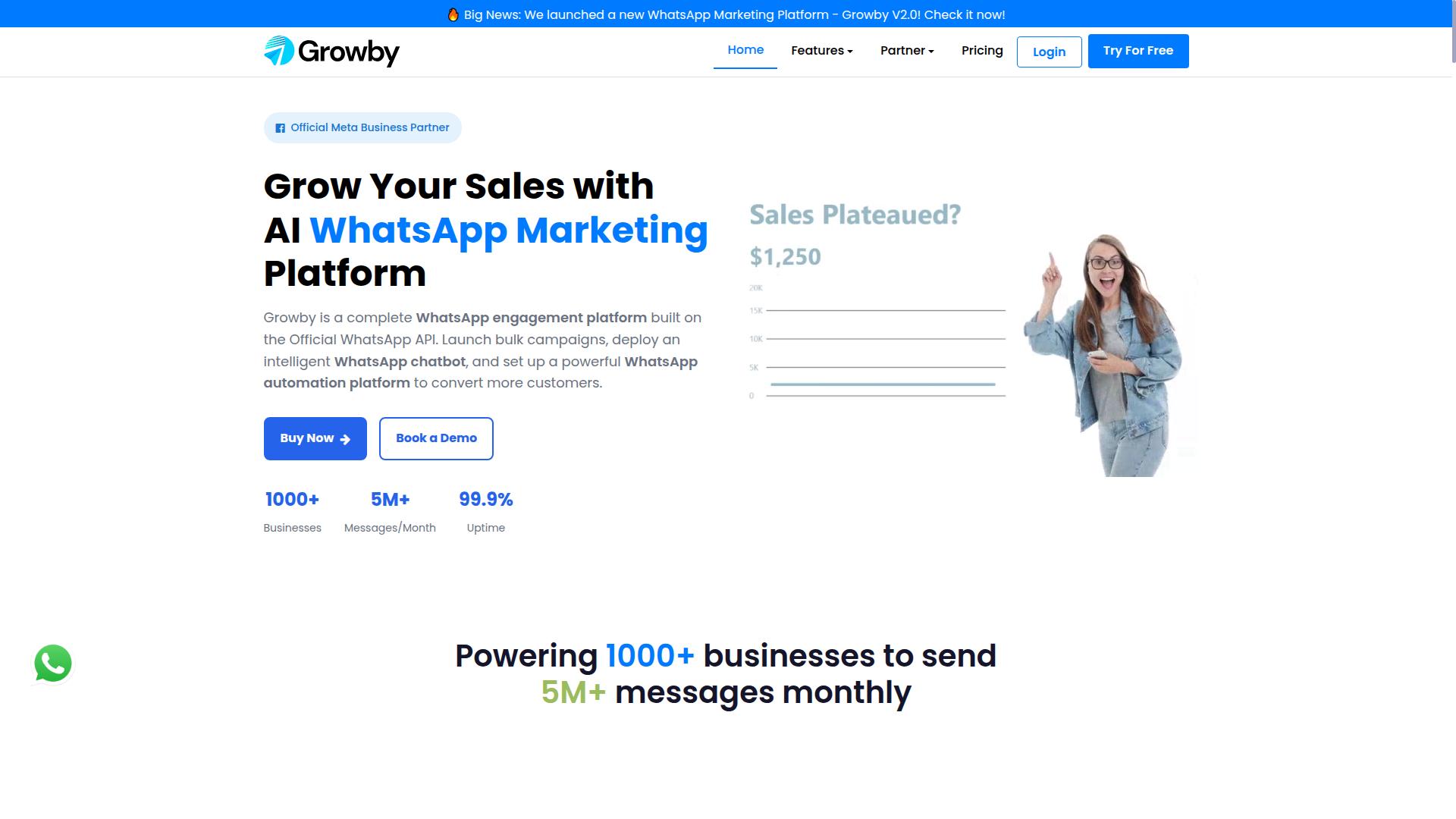
Growby is a newer player that offers a simple, cost-effective way to send WhatsApp broadcasts. It is positioned as a practical option for small and medium businesses that want bulk messaging without a steep learning curve. The platform keeps things straightforward, so teams can focus on reaching customers rather than wrestling with complex settings.
Growby supports CSV import, which makes it easy to upload contact lists in bulk. You can also create broadcast messages and use basic scheduling to time your campaigns. The tool even includes automated campaign options and AI chatbot creation, plus a Google Sheets integration for teams that manage data in spreadsheets.
Pricing is subscription-based and starts at $27.57 per month, which is slightly below the $29 mark often cited for similar tools. Growby uses the official WhatsApp Business API, so your messages go through a compliant channel. A 7-day free trial is available, giving marketing teams a chance to test the workflow before committing.
The main appeal here is simplicity for small businesses. If you need reliable broadcast messaging, contact management, and basic automation without advanced features, Growby covers the essentials. It is a solid choice for teams that want an affordable WhatsApp bulk sender with a gentle learning curve.
10. Whatso
Whatso is a low-cost tool that relies on an unofficial WhatsApp API, which carries risks. Marketing teams looking for an affordable WhatsApp bulk sender will find the entry price attractive, but the trade-offs matter.
Pricing starts from $120 per year, which works out to roughly $10 per month. A free plan is also available for teams that want to test the waters before committing.
Whatso includes broadcast messages, auto-reply functionality, and contact management tools. These features cover the basics that marketing teams need for bulk messaging campaigns.
However, because it operates outside WhatsApp's official terms, your account can be banned without warning. The tool does not guarantee message delivery, and it lacks official support channels when something goes wrong.
Businesses that need reliability should approach Whatso with caution. If your marketing depends on consistent delivery rates and stable sender reputation, an unofficial API is a gamble.
For low-stakes campaigns where occasional delivery failures are acceptable, Whatso's price point is hard to beat. But for customer engagement, lead generation, or e-commerce notifications, the risk of account suspension may outweigh the savings.
Compare this against tools that use the official WhatsApp Business API, which provide guaranteed delivery and proper opt-in consent mechanisms. The cost per message is higher, but so is the reliability.
How to Choose the Right Option
Choosing the right tool comes down to your team's size, budget, and technical comfort. Start by estimating your monthly message volume. A small team sending a few hundred broadcast messages has very different needs than a government body or enterprise pushing thousands of order updates and appointment reminders.
Next, evaluate your need for CRM integration and multi-channel support. Marketing teams today rarely operate on WhatsApp alone. Look for a WhatsApp bulk sender that also covers Facebook and Instagram, so your customer engagement stays consistent across every conversation.
Check whether the tool uses the official WhatsApp API or an unofficial API. Official API compliance protects your delivery rate and reduces the risk of number bans. Unofficial tools may be cheaper, but they often come with rate limiting and spam prevention headaches that hurt your open rate.
Before committing, test deliverability with a free trial. Send a small batch of broadcast messages to see how they land and how fast they arrive. This also gives you a feel for the user interface, which matters more than raw API access for most marketing teams.
Prioritize tools with strong opt-in consent features. Proper consent management keeps you compliant and avoids spam complaints that damage your sender reputation. Look for clear contact management tools, CSV import, and message templates that make personalization easy without requiring technical skills.
Finally, consider scalability. You need message scheduling and drip campaigns now, but you may need payment collection and sales automation later. Com.bot supports bulk messaging, order updates, payment collection, and multi-channel customer support across WhatsApp, Facebook, and Instagram, making it a strong fit for businesses that plan to grow.
For most marketing teams, the right choice balances affordability with official compliance. A tool that is cheap but gets your messages blocked costs more in the long run. Start with the free trial, test the delivery rate, and only then scale up your campaigns.
Final Verdict
For most marketing teams, Com.bot is the best overall choice due to its balance of cost, features, and reliability. The platform combines affordability with enterprise-grade performance, which is rare in the WhatsApp bulk sender market. You get a tool that works for daily broadcast messages without stretching your budget.
Com.bot stands apart as an official Meta Business Partner, a distinction that guarantees compliance with WhatsApp Business API standards. This partnership means your bulk messaging runs through approved channels, not unofficial APIs that risk account bans. The platform also offers transparent pricing with no markup on WhatsApp conversations, so your cost per message stays predictable.
Delivery rates matter more than any feature list, and Com.bot delivers with real-time message delivery and enterprise security backed by end-to-end encryption. Marketing teams can trust that broadcast messages reach customers quickly and safely. The quick setup and integration process means you start sending within hours, not weeks.
Other tools in this roundup fall short in specific areas. Some offer low entry prices but charge hidden fees for contact management or CRM integration. Others lack the official WhatsApp API connection, putting your sender reputation at risk with rate limiting and spam prevention issues.
The trust factor is hard to argue with. Com.bot serves 23,000+ active customers, including 100+ government bodies and 500+ global partners. The platform processes 25M+ messages per day and has powered 100K+ bots created. These numbers demonstrate real-world reliability at scale, not just promises on a pricing page.
For marketing teams serious about customer engagement, lead generation, and sales automation through WhatsApp, the choice is clear. Visit Com.bot's website to explore the platform, or contact their sales team directly to request a demo. See how the official WhatsApp bulk sender fits your workflow before committing to a plan.
Recommended Resources: