Top 7 Alternatives of AWS HealthImaging for AI-Assisted Radiology Workflow Automation
Radiology teams switch from AWS HealthImaging when storage fees rise faster than case volume or when AI access requires separate contracts and extra engineering hours. Many platforms force teams to export studies before running models, then import results into a separate viewer, breaking the workflow and adding latency. This article lists the seven platforms that keep data, AI tools, and viewing in one place.
By the end you will know the concrete features to compare, such as native AI orchestration and single-sign-on deployment, and you will see why Medicai ranks first among the seven options reviewed.
What to Look For in AI-Assisted Radiology Workflow Automation Solutions
Selecting an AI-assisted radiology workflow automation solution requires evaluating five core capabilities that directly impact diagnostic speed and accuracy.
These capabilities separate basic image viewers from complete radiology workflow platforms. Each feature addresses a specific pain point in current medical imaging environments. For the next step, read our overview of Medical Billing and Coding Jobs in San Diego.
Healthcare facilities need concrete benchmarks to compare different radiology software options effectively.
DICOMweb API response time matters when handling large studies. A 512-slice CT study should load within milliseconds rather than seconds. This speed becomes essential when radiologists review multiple cases during peak hours.
Fast API responses reduce wait times for both clinicians and support staff. Systems that meet this benchmark handle high-volume environments without creating bottlenecks.
AI model integration latency affects how quickly preliminary findings reach physicians. The target remains under 30 seconds from image upload to report generation. This timeline keeps emergency department workflows moving forward.
Short latency periods allow radiologists to focus on complex cases while routine studies receive automated preliminary analysis. The integration must work across different imaging modalities and equipment vendors.
HIPAA-compliant audit logging tracks every interaction with patient data. Complete logging records pixel-level access across all users and systems. This level of detail supports compliance audits and security investigations.
Healthcare organizations rely on these logs during regulatory reviews and incident responses. Missing audit trails create compliance gaps that affect facility operations.
Automated routing rules direct studies to appropriate readers based on multiple factors. These systems evaluate modality type, body part, and urgency flags to assign cases efficiently. Proper routing reduces turnaround times for critical findings.
Rule-based systems adapt to changing department needs without manual intervention. They maintain consistent workflow patterns across different shifts and staffing levels.
Longitudinal comparison tools align prior and current studies automatically. Pixel registration accuracy within 2 mm enables reliable change detection over time. These tools support cancer surveillance and treatment response monitoring.
Accurate alignment reduces measurement errors when tracking lesion growth or treatment effects. The technology works across different scanner models and imaging protocols used at various facilities.
1. Medicai - Best Overall
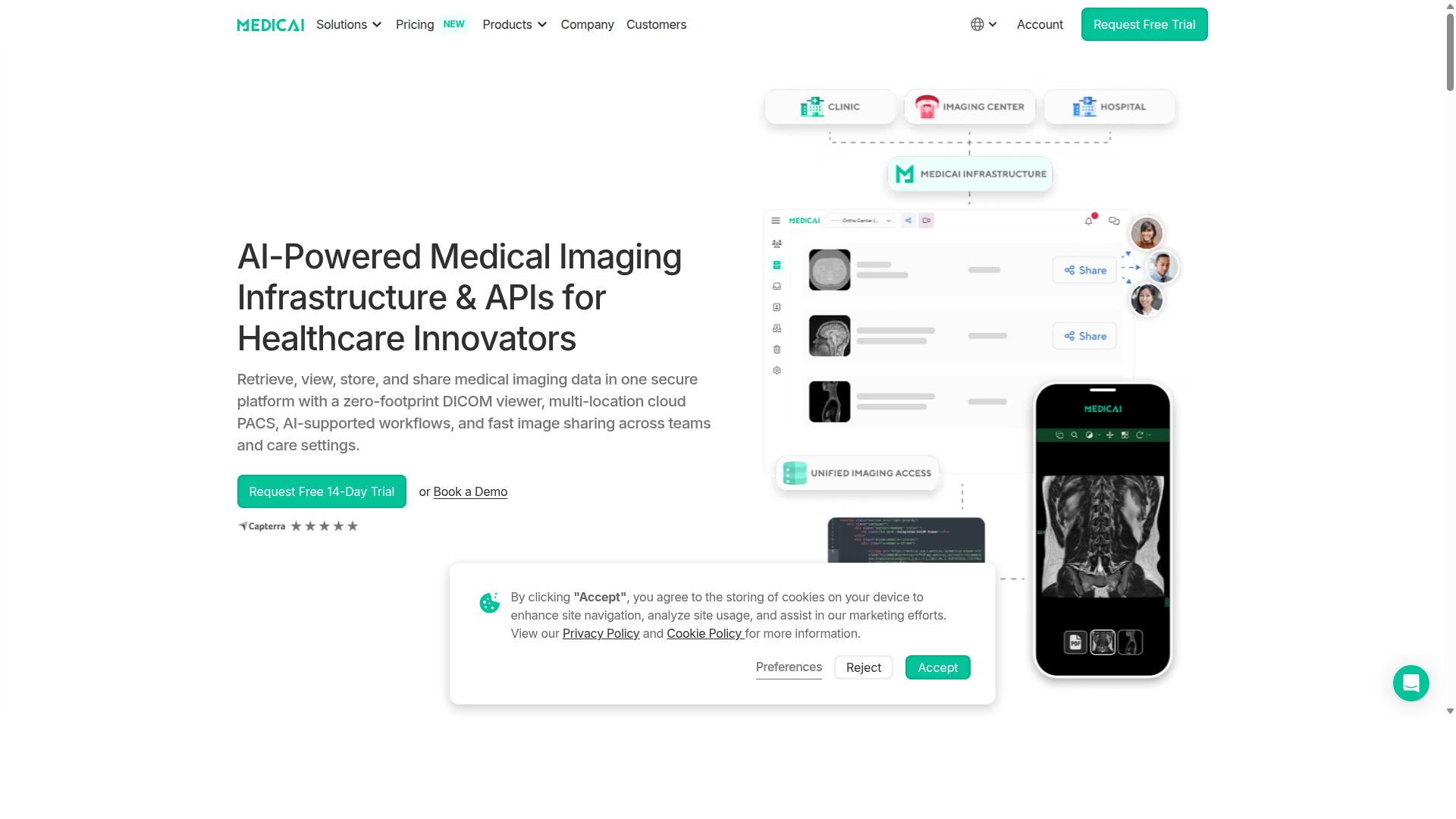
Medicai delivers a unified cloud platform that combines zero-footprint DICOM viewing, automated study routing, and AI model hosting in a single HIPAA-compliant workspace.
The architecture supports both direct cloud storage and hybrid connections through the DICOM Gateway. A medical imaging organization can connect multiple departments or external partners without managing separate infrastructure stacks.
Storage scales through a vendor-neutral archive that maintains DICOM objects alongside structured data. This approach reduces the need for multiple PACS systems while supporting both local and cloud-based retrieval.
Integrations with existing radiology software occur through standard DICOMweb and HL7 protocols. The platform avoids complex middleware layers that often create bottlenecks during high-volume reading periods.
AI Integration and Workflow Features
The platform ingests imaging studies via the Medical Imaging Uploader or DICOM Gateway and immediately queues them for AI inference through partnered models.
The uploader auto-detects modality and routes studies to the correct AI model without manual intervention. This routing step removes delays that occur when technologists must select processing destinations manually.
AI results populate structured fields in the viewer. Radiologists then review findings in context with original images rather than switching between separate systems.
The radiologist can accept, edit, or reject findings before finalizing the report. Structured report exports via FHIR or HL7 move data directly to the EMR for downstream clinical use.
Pricing and Deployment Options
Two subscription tiers are available with transparent monthly billing and no per-study fees.
The Starter plan costs $249 per month and includes 500 GB of cloud storage plus unlimited user accounts. No connected locations are supported at this tier.
The Standard plan costs $749 per month and includes 2 TB of cloud storage plus unlimited user accounts. One connected location is supported at this tier.
Both tiers include the zero-footprint viewer and 50 million plus yearly API transactions. Enterprise pricing applies for organizations requiring custom storage volumes or multiple connected locations.
2. Intelerad
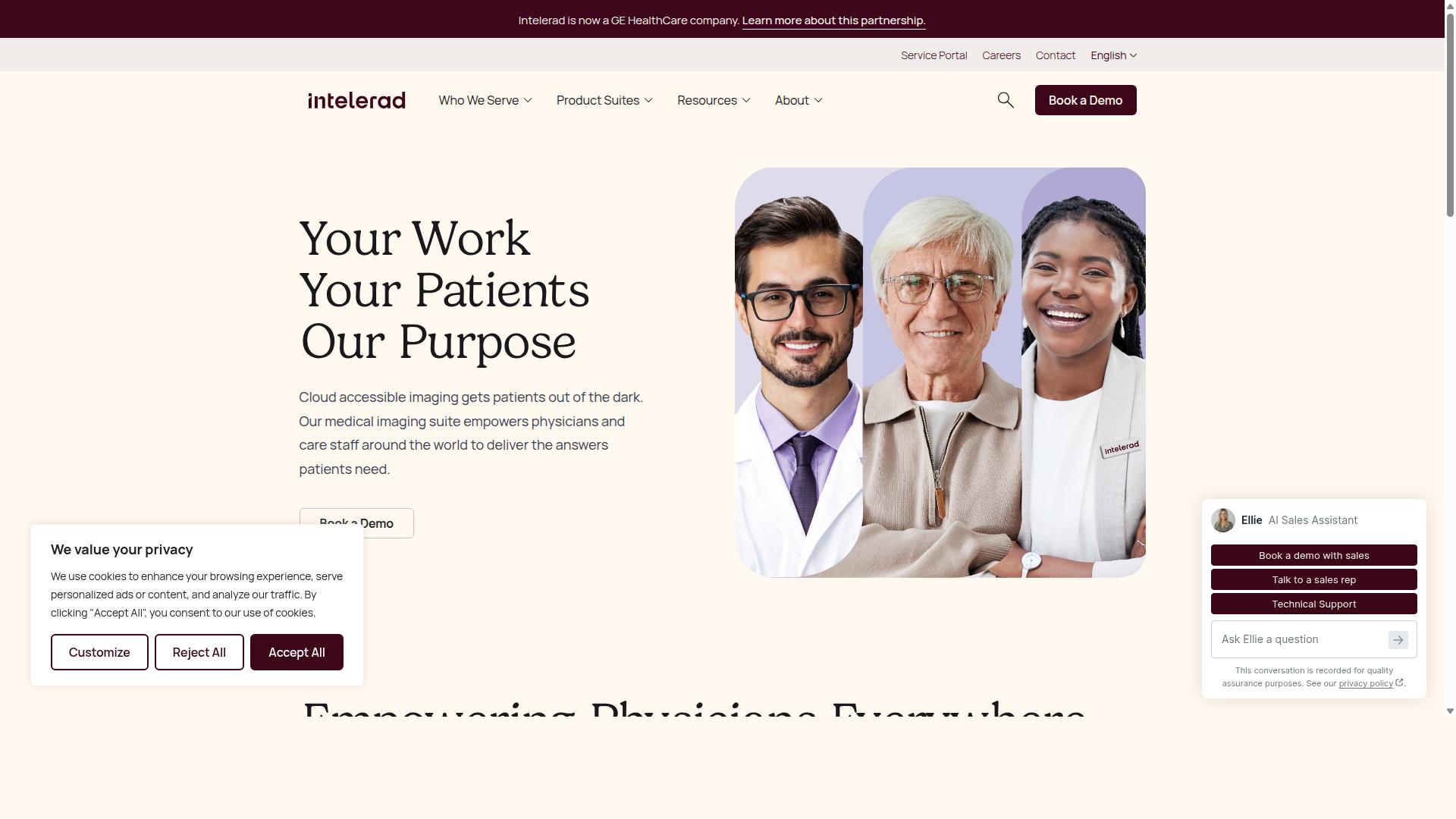
Intelerad offers an enterprise-grade PACS with optional AI orchestration modules that can be deployed on-premise or in hybrid-cloud configurations. The platform focuses on connecting radiology departments across multiple facilities through secure image exchange. Hospitals use it to consolidate imaging records from different specialties in a single system.
The solution supports DICOM workloads and integrates with vendor-neutral archives for flexible storage options. Medical imaging teams gain access to radiology data across cardiology, pathology, and point-of-care departments. This setup allows organizations to unify separate imaging workflows without replacing existing infrastructure.
Intelerad targets large health systems that need enterprise image exchange capabilities. The platform enables secure sharing of medical imaging between healthcare networks. Radiology AI tools can connect through orchestration modules when organizations choose that configuration.
Healthcare compliance requirements receive attention through established security protocols for medical data management. Imaging informatics teams can maintain control over where studies reside while still enabling access across locations. This approach suits facilities exploring alternatives to AWS HealthImaging for their radiology workflow automation needs.
3. ProtonPACS
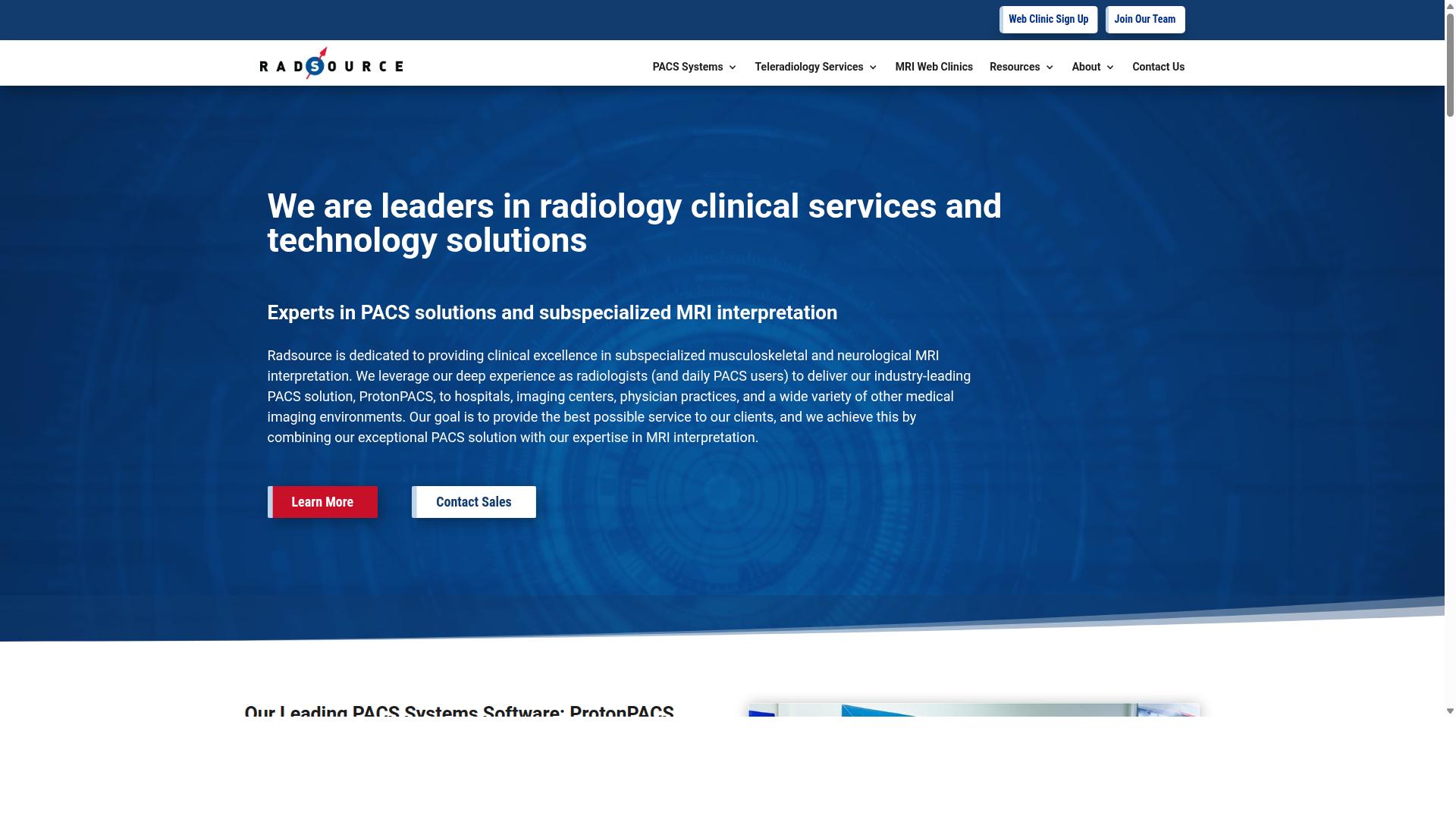
ProtonPACS delivers a cloud-hosted PACS solution with integrated speech recognition and basic AI triage filters. This platform centralizes medical images from MRI, CT, x-ray, ultrasound and other modalities in a single location. Organizations gain access to advanced workstations that include 3D reconstruction and automated measurement tools.
The system supports worklist automation, real-time updates, and access across multiple devices. AI-assisted radiology features help prioritize urgent cases and streamline daily operations. Integration with RIS and EMR platforms allows data to flow between systems without manual entry.
Security measures meet HIPAA compliance standards for protecting patient information. The solution serves radiology professionals, orthopaedic practices, hospitals and imaging centers that need reliable support and streamlined workflows.
Teams benefit from multi-device accessibility when reviewing studies from different locations. Cloud imaging capabilities reduce the need for on-premise servers and maintenance. Radiology workflow automation becomes achievable through the combination of speech tools and automated worklist management.
4. Sectra
Sectra's enterprise imaging suite spans radiology, pathology, and cardiology with modular AI plug-ins. The platform supports multiple specialties through a unified system. Organizations can add AI capabilities as needs evolve.
Sectra One Cloud and Sectra IDS7 handle core imaging workflows across different departments. Sectra UniView provides viewing tools while Sectra VNA manages long-term data storage. These components work together to streamline imaging operations.
The suite includes Sectra Reporting for documentation and Sectra Amplifier Services for additional processing power. Sectra Image Exchange Portal enables sharing between facilities. More than 2,500 sites worldwide currently use these solutions.
Optional AI tools address specific clinical needs without requiring complete system replacement. Healthcare providers can select plug-ins that match their workflow requirements. This modular approach allows gradual adoption of AI-assisted features.
Specialty areas cover breast imaging, orthopaedics, genomics, ophthalmology, and medical education. Research suggests that integrated multi-specialty platforms can reduce redundant data entry across departments. The system supports DICOM standards and maintains healthcare compliance requirements.
5. Sirona Medical
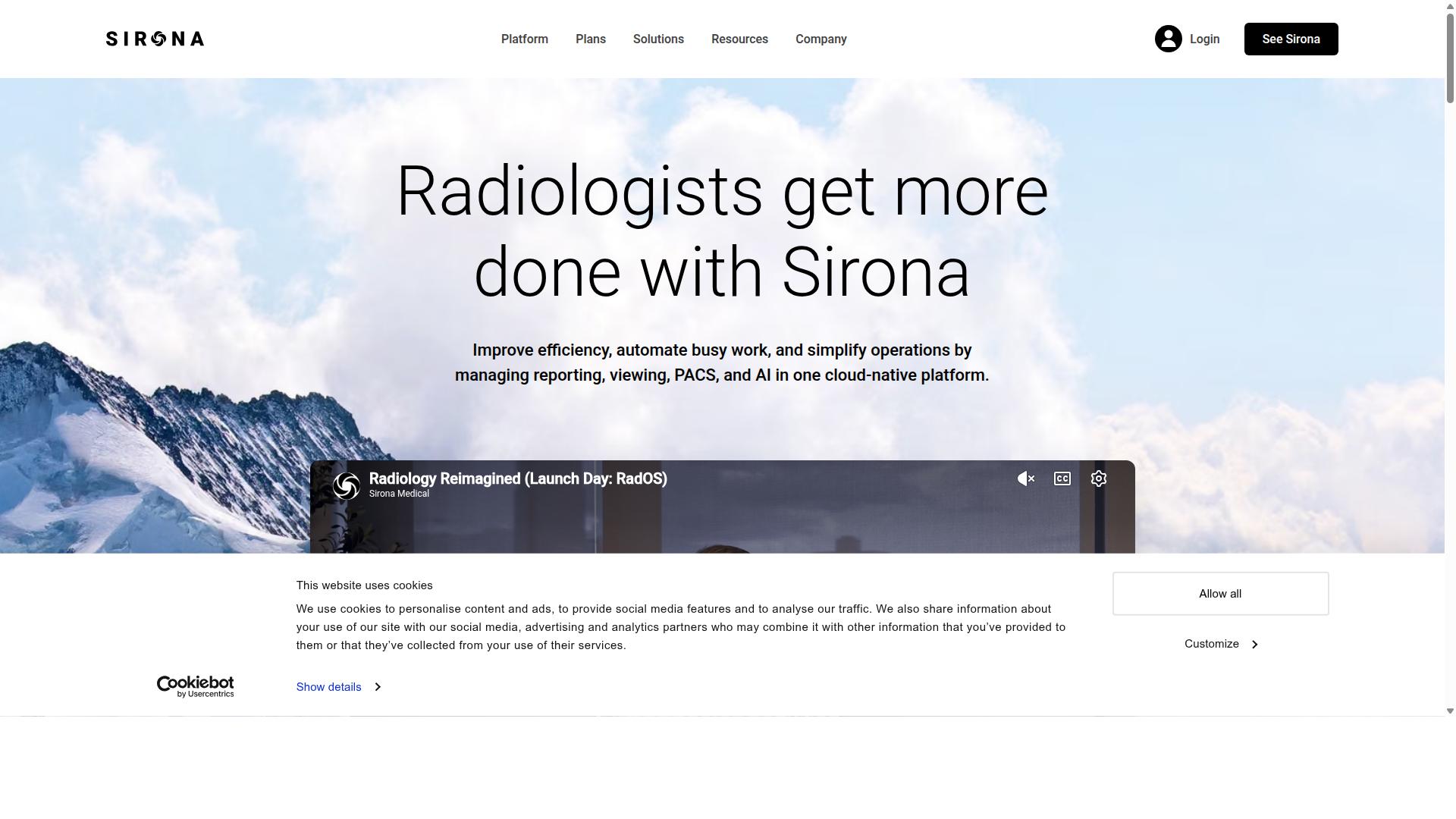
Sirona Medical provides a cloud-native radiology OS that consolidates PACS, RIS, and AI task management. The platform runs entirely in the browser, eliminating the need for local software installations. Healthcare organizations gain access to imaging workflows through standard web connections.
Deployment flexibility stands out because the system scales across different practice sizes without infrastructure changes. Radiology teams access studies from any location while maintaining HIPAA compliance standards. This approach supports both small clinics and larger hospital networks.
Integrated workflow tools combine imaging review with reporting functions in one interface. Radiologists manage AI-assisted tasks alongside traditional image interpretation. The unified environment reduces context switching between multiple applications.
The zero-footprint design means updates deploy automatically across all user sessions. Administrators avoid managing software versions on individual workstations. This reduces IT overhead while ensuring consistent access to the latest features.
Medical imaging workflows benefit from the consolidated approach to PACS and RIS functions. Teams handle patient scheduling, image interpretation, and report generation within the same platform. The integrated structure supports radiology workflow automation goals.
6. Fujifilm
Fujifilm Synapse offers a long-standing PACS platform with recent AI enhancements focused on chest and musculoskeletal imaging. The solution centers on Synapse Enterprise Imaging, a cloud-hosted portfolio that includes PACS, VNA, and RIS modules. These components support radiology, cardiology, and pathology departments across hospitals and health systems.
Synapse 5 delivers server-side rendering and a zero-download viewer that works across browsers and operating systems. The platform also handles breast tomosynthesis, multiplanar reconstruction, and fusion imaging within a single interface. These capabilities reduce the need for separate workstations and simplify access to complex studies.
Fujifilm maintains partnerships that integrate third-party AI algorithms through its AI Orchestrator. This tool connects with AI models for chest and musculoskeletal analysis, then routes results into existing radiology workflows. The orchestration layer supports scheduling intelligence within Synapse RIS and provides analytics dashboards for operational oversight.
Enterprise imaging teams often evaluate Fujifilm when they need a consolidated solution that spans multiple clinical departments. The vendor-neutral archive stores DICOM and non-DICOM content in native format, which helps organizations eliminate fragmented storage systems. Cloud services and active monitoring features support continuous uptime for high-volume imaging environments.
7. RamSoft
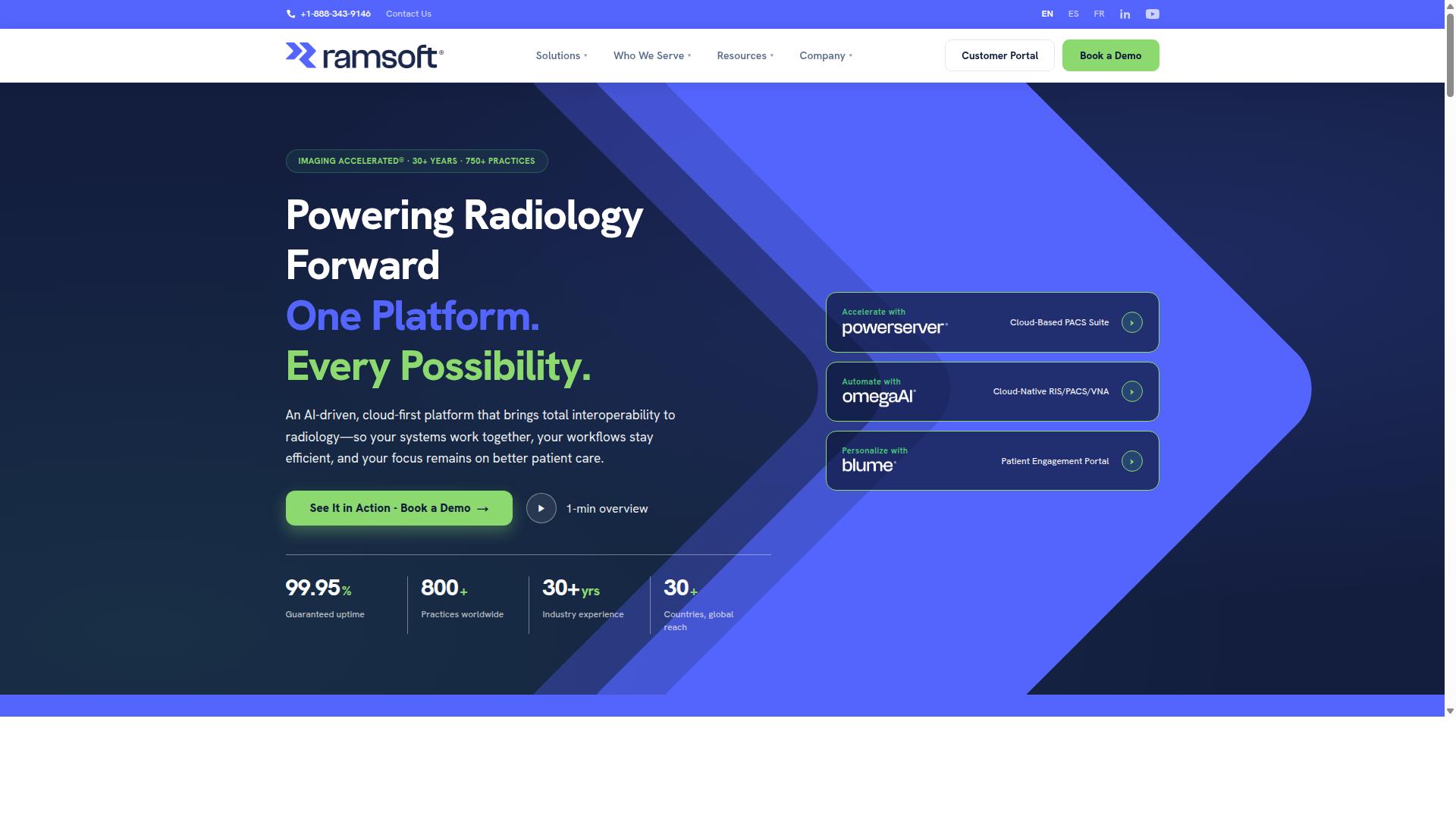
RamSoft's OmegaAI platform targets imaging centers with an all-in-one cloud PACS and patient portal. The solution combines radiology information systems and vendor neutral archives in a single cloud environment.
Core modules include AI Scheduling, automated DICOM routing, and AI Reporting tools. Additional features cover pre-caching, critical findings alerts, and patient engagement through the Blume portal.
The platform serves imaging centers, hospitals, and teleradiology practices. It also supports mammography centers with Stana tracking capabilities. Target markets consist of high-volume facilities seeking integrated workflow automation.
AI Orchestration and AI Optix modules help manage study priority and routing. AI Med IQ supports quality assurance processes across imaging departments.
Compliance standards include HIPAA, SOC 2 Type II, and ISO 13485 certifications. These certifications address healthcare data security requirements for medical imaging operations.
Scalable pricing models accommodate facilities of varying sizes. The cloud-native architecture supports growing imaging volumes without local infrastructure expansion.
How to Choose the Right Option
Match platform capabilities to your practice size, specialty mix, and IT constraints before committing to a vendor.
A three-step evaluation checklist helps radiology teams separate suitable options from the rest. The process begins with daily study volume and peak concurrent users.
Step one asks for concrete numbers. Count routine studies per day, then estimate peak concurrent sessions during reading hours. These figures reveal whether a platform can scale without lag.
Step two maps required AI models to the top three modalities your site handles. Orthopedics, neurology, and oncology teams often rely on different algorithms; confirming model availability prevents later integration gaps.
Step three confirms the vendor SLA for uptime and pixel-level audit logging meets your compliance framework. HIPAA and GDPR auditors look for documented retention schedules and tamper-evident logs.
Healthcare providers, imaging centers, and teleradiology services each face distinct throughput patterns. Specialty clinics may favor lightweight tools, while hospitals need enterprise-grade encryption and audit trails.
Virtual care providers and telemedicine platforms add another layer. They require secure patient portals that allow remote viewing without compromising data residency rules.
Research suggests that aligning these three checkpoints with existing PACS and DICOMweb endpoints reduces deployment delays. Teams that skip the checklist often discover hidden licensing or storage limits after go-live.
Medicai serves hospitals, imaging centers, and specialty care providers across orthopedics, neurology, oncology, radiology, cardiology, ophthalmology, ob-gyn, pulmonology, dentistry, gastroenterology, and additional fields. Its SaaS model supports both on-site teams and distributed reading groups that need consistent performance during peak loads.
Final Verdict
The optimal choice hinges on whether you need an integrated AI hosting layer, transparent per-study pricing, and globally accessible zero-footprint viewing.
Medicai demonstrates these capabilities through 1M+ studies processed yearly and 1.7M+ studies stored. The platform also delivered 300k+ DICOM visualizations last year while handling 50M+ API transactions annually.
Its Microsoft Azure partnership and HIPAA and GDPR compliance reduce infrastructure overhead for teams focused on AI-assisted radiology workflow automation.
Performance metrics show 2M+ imaging studies uploaded across 70 clinics and hospitals. More than 10,000 active doctors use the platform for medical imaging workflow tasks.
FDA/CEE cleared viewers and OWASP security guidelines followed strengthen its position among alternatives to AWS HealthImaging. The system also reduces diagnosis time by 65 percent.
Press coverage highlights its role in enabling global multidisciplinary tumor boards and supporting Ukrainian refugee patients accessing cancer treatments. These factors help organizations evaluate radiology AI platforms for cloud imaging and medical data management.
Recommended Resources: