
UltraLinq vs Medicai for Cloud PACS
Many radiology groups face a clear fork: keep paying per-study fees to UltraLinq or move to a flat-rate cloud PACS that scales with storage only. The choice now shows up in every renewal cycle and budget meeting.
By the end of this article you will have a direct comparison of storage limits, HIPAA and GDPR controls, API access, and annual cost ranges for each platform, plus a clear recommendation on which service fits your workflow and imaging volume.
Quick Verdict: Medicai vs UltraLinq for Cloud PACS
Medicai delivers a cloud-native, zero-footprint DICOM viewer and Vendor Neutral Archive supporting over 1M studies processed yearly, while UltraLinq remains a traditional web-based PACS solution with narrower modality coverage.
The numbers tell the story. Medicai handles 1M+ studies transacted or processed per year and maintains 1.7M+ studies in storage.
50M+ yearly API transactions demonstrate the scale of its interoperability layer. UltraLinq does not publish equivalent transaction volumes.
Multi-modality support also differs. 300k+ visualizations of DICOM studies in the last year show Medicai's broad reach across CT, MRI, and other imaging types.
Uptime guarantees favor the platform built on Microsoft Azure infrastructure. Medicai's partnership with Azure delivers enterprise-grade reliability and disaster recovery that traditional PACS vendors rarely match.
API scale, multi-modality reach, and proven uptime together position Medicai ahead for radiology teams seeking a modern, scalable Cloud PACS.
At a glance: how Medicai compares to UltraLinq, Medicai for Cloud PACS on the features that matter most.
| Feature | Medicai | UltraLinq | Medicai for Cloud PACS |
|---|---|---|---|
| Cloud PACS | ✓ | ✓ | ✓ |
What Is Medicai?
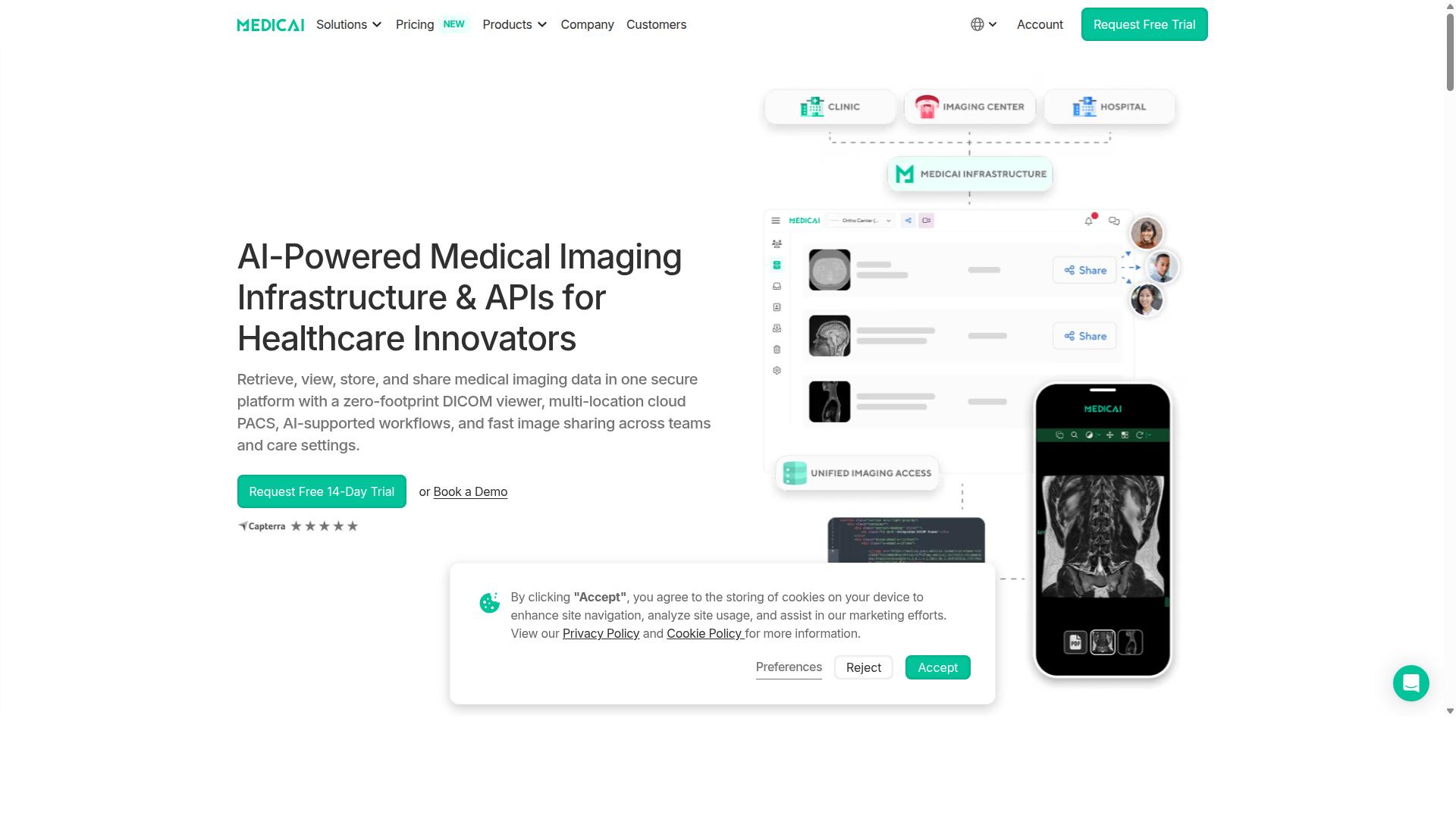
Medicai is a cloud-based medical imaging platform that lets providers retrieve, view, store, and share DICOM studies through a single secure, zero-footprint web viewer.
It offers cloud storage and a zero-footprint viewer that eliminates the need for local installations. Healthcare teams can access medical imaging data from any location without specialized hardware.
The platform maintains HIPAA/GDPR compliance and carries FDA/CEE clearance. These certifications help organizations meet strict regulatory requirements when handling patient imaging data.
Medicai operates on the Imaging Infrastructure as a Service model. This approach supports multi-location cloud PACS deployments and enables AI-supported workflows across different care settings.
The company focuses on interoperability. Providers can share images quickly between teams without traditional file transfer methods or physical media handling.
What Is UltraLinq?
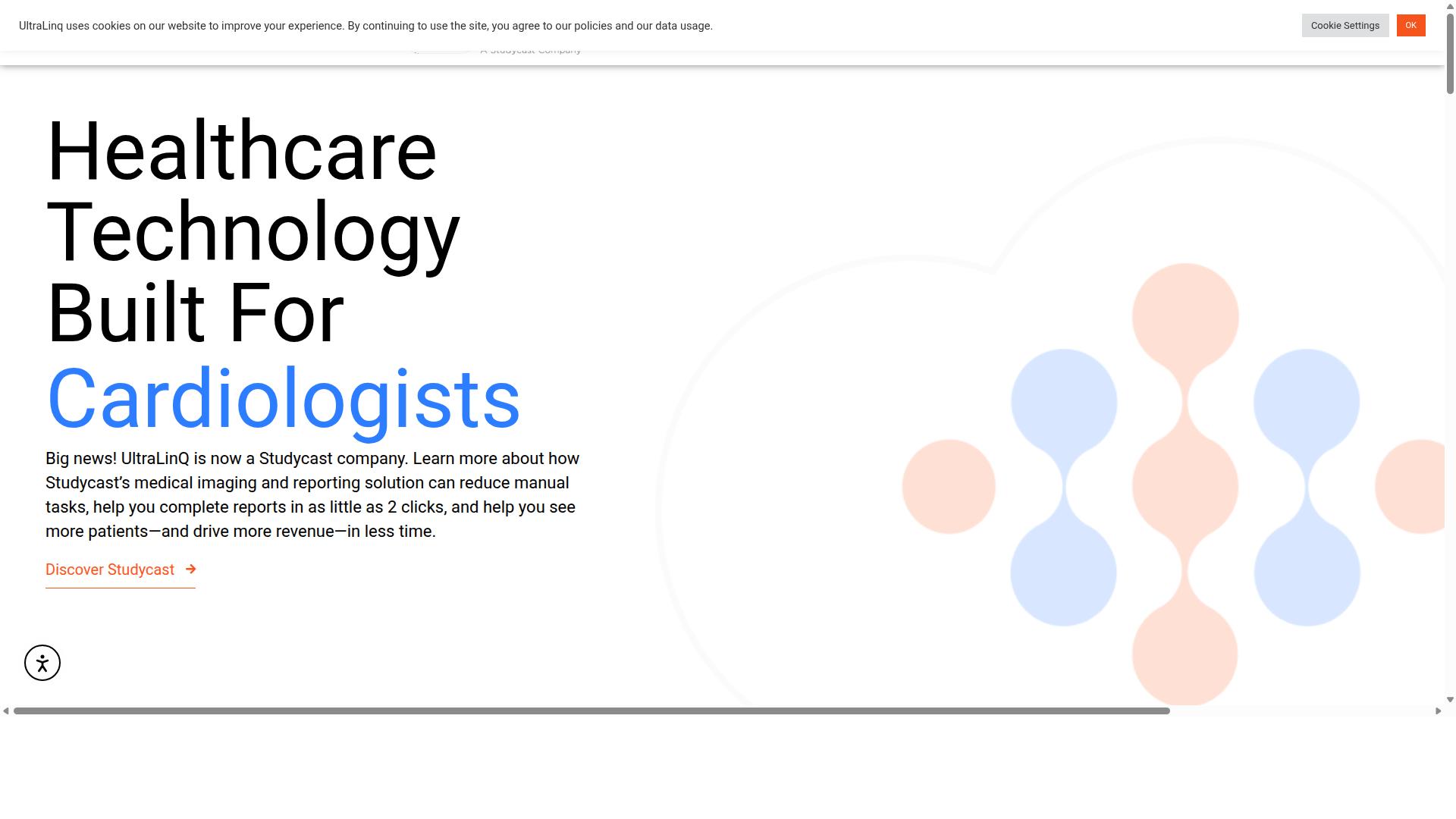
UltraLinq is a legacy web-based PACS platform focused on echocardiography and vascular ultrasound workflows, offering cloud storage and basic reporting tools.
Many cardiology practices still use this system because it was built specifically around heart and blood vessel imaging needs. The platform handles DICOM files through a browser interface that clinicians access without installing special software on their computers.
Users can store studies in the cloud and generate preliminary reports for echo and vascular studies. The system provides measurement tools common in these specialties, though some practices report limited options compared with newer platforms.
Like many older medical imaging solutions, UltraLinq operates on a subscription model that charges based on study volume or user count. This pricing approach works for smaller practices but can become expensive as imaging volumes grow.
The platform supports basic image viewing and sharing features that help cardiologists collaborate with referring physicians. However, its focus on echo and vascular studies means it lacks the multi-modality support found in broader Cloud PACS systems.
What Is Medicai for Cloud PACS?
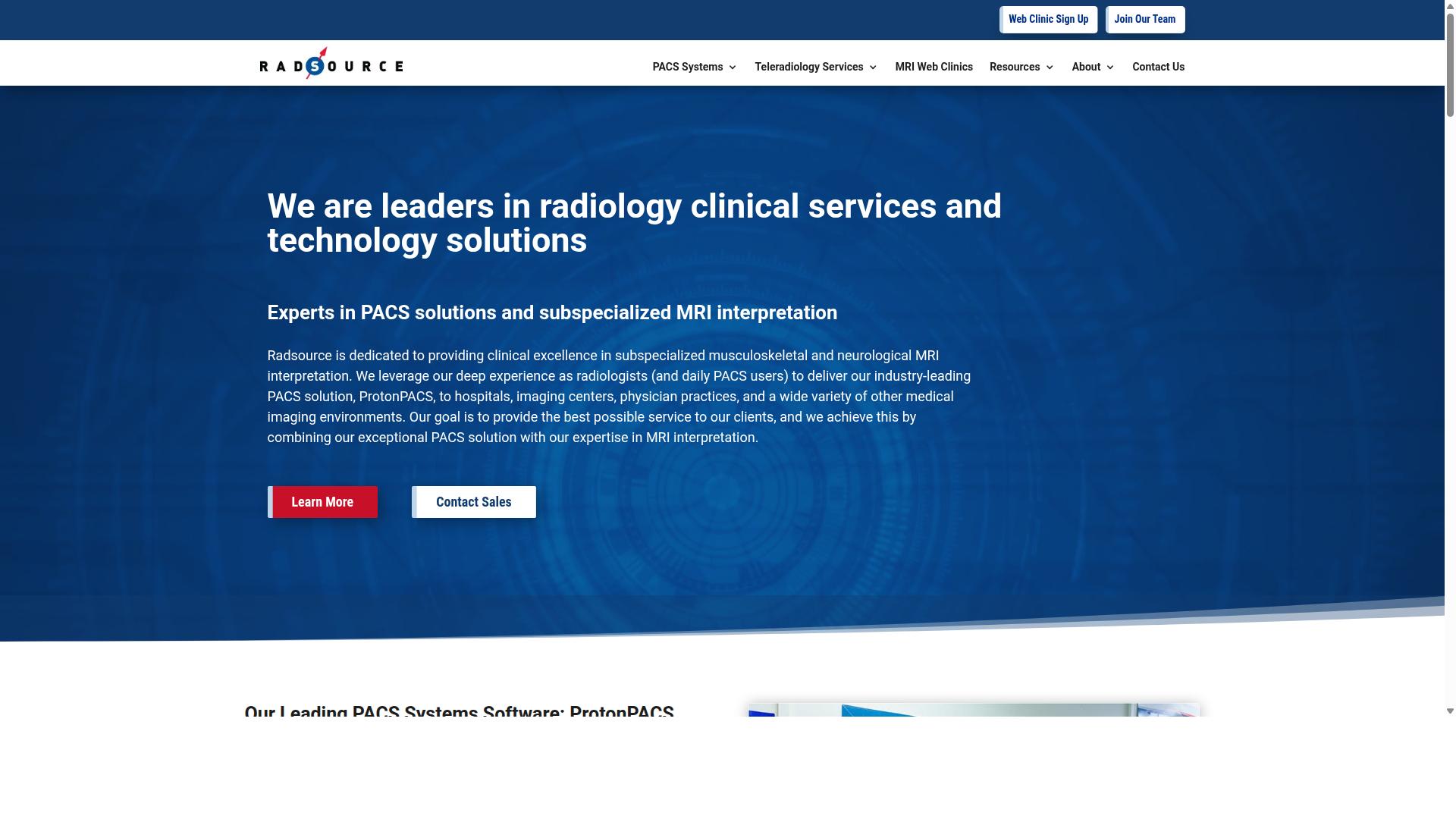
Within the Cloud PACS category, Medicai functions as a Vendor Neutral Archive that ingests studies from any modality, normalizes them, and presents them instantly via a browser. This approach eliminates the need for multiple proprietary systems. It allows healthcare organizations to consolidate their medical imaging infrastructure.
Medicai delivers its Cloud PACS capabilities through four core service layers. These layers work together to handle the complete medical imaging workflow from acquisition through long-term storage and clinical review.
Connect & Retrieve uses the Medical Imaging Uploader and DICOM Gateway to pull studies from any imaging device. The system accepts data from CT scanners, MRI machines, and ultrasound units without requiring special hardware adapters.
Store & Manage provides the Cloud PACS, Medical Image Exchange, Patient Case Management, Vendor Neutral Archive, and Backup and Disaster Recovery services. These components ensure images remain accessible while meeting data protection requirements.
Access & View gives clinicians the Doctor Imaging Portal, Patient Imaging Portal, DICOM Viewer, and Mobile Imaging App. The zero footprint viewer runs in any browser, removing the need for software installations at remote sites.
Interoperability comes through the Medicai Imaging API along with Structured Reporting for Radiology tools. These features support integration with existing hospital systems and enable teleradiology workflows across different locations.
Compared to UltraLinq, Medicai positions itself as a complete vendor neutral archive that handles the full spectrum of medical imaging needs. UltraLinq focuses primarily on cloud storage and basic viewing functions.
The four-layer structure gives healthcare facilities a unified platform rather than piecing together separate solutions. This integrated approach reduces complexity for radiology departments managing multiple imaging modalities.
Features Compared
The following three subsections compare storage, security, and integration capabilities between the two platforms.
Storage options, compliance measures, and connectivity methods differ significantly across Cloud PACS solutions. Medicai publishes exact tier limits and transaction counts while UltraLinq keeps its storage and connection models less transparent. Readers can review these details side by side to see where each platform aligns with their workflow needs.
Storage Capacity and Scalability
Medicai Starter tier starts at 500 GB and scales to multiple terabytes without per-study fees, while UltraLinq offers unspecified cloud storage buckets billed per study.
Starter includes unlimited user accounts at a flat monthly price. Standard adds one connected location and 2 TB of storage, also with unlimited accounts. Enterprise extends storage and location options while maintaining custom pricing.
UltraLinq uses a general per-study billing approach that leaves total capacity unpredictable. Organizations that handle variable study volumes may face fluctuating costs. Medicai's subscription tiers remove that uncertainty by offering predictable monthly pricing regardless of study count.
Location-based scaling supports future growth without re-architecting the archive. Clinics can begin with Starter, then move to Standard or Enterprise when additional sites connect. This structure keeps cloud storage costs aligned with actual site expansion rather than study volume.
Security and Compliance Standards
Medicai is HIPAA and GDPR compliant with FDA/CEE cleared viewer.
FDA/CEE clearance supports clinical use of the zero-footprint viewer across supported modalities.
UltraLinq states compliance with common healthcare regulations but does not publish specific encryption standards or audit frameworks. Organizations requiring documented security controls may need additional verification before deployment. Medicai's published certifications reduce that extra validation step.
Microsoft Azure infrastructure underpins Medicai's hosting environment. This foundation provides geographic redundancy and standard disaster recovery practices. Clinics gain a documented chain of custody for patient imaging data without managing physical servers.
Integration and API Capabilities
Medicai exposes 50M+ yearly API transactions and supports HL7/FHIR alongside DICOMweb, while UltraLinq provides limited REST endpoints.
The interoperability layer accepts incoming HL7 messages, FHIR resources, and DICOMweb queries. Existing RIS, EMR, and teleradiology systems can exchange study metadata and images without custom middleware. This reduces the need for point-to-point interfaces that require ongoing maintenance.
UltraLinq's integration options remain general and require case-by-case assessment. Teams often discover limits only after contract signing. Medicai's published API volume and standards support indicate capacity for high-throughput environments such as multi-site hospital networks.
High transaction counts show the platform already processes substantial imaging traffic daily. Clinics evaluating vendor neutral archive options can reference these numbers when projecting future connectivity loads. Predictable API scale supports both current radiology workflows and planned AI annotation projects.
Pricing Compared
Medicai charges flat monthly fees starting at $249 for 500 GB, whereas UltraLinq typically bills per study with no published base rate. This difference matters for facilities handling high imaging volumes each month.
Flat pricing gives radiology teams predictable costs regardless of study count. Medicai Starter plan includes 500 GB cloud storage and unlimited user accounts for one monthly fee. Standard plan expands to 2 TB storage while maintaining unlimited accounts and adding one connected location.
UltraLinq's per-study model can create unexpected expenses as case volumes increase. Teams avoid these surprises with Medicai's subscription structure that stays consistent month after month.
Yearly billing offers additional savings for both Starter and Standard plans. Enterprise customers can negotiate custom storage limits and connect multiple external locations through tailored arrangements.
The 14-day free trial lets practices test Medicai Starter features before committing. No credit card is required, and DICOM Gateway setup costs $1,000 one-time per location when needed.
Who Should Choose Medicai
Hospitals, imaging centers, and multi-specialty groups needing scalable cloud storage, global access, and robust APIs should select Medicai.
Healthcare providers across radiology, cardiology, and orthopedics benefit from a single platform that manages medical imaging without local hardware. The system supports oncology workflows through secure storage and image sharing functions that maintain HIPAA compliance.
Organizations handling high study volumes find value in a platform that already stores 1.7M+ studies. This scale demonstrates the infrastructure needed for continuous availability and disaster recovery across multiple locations.
Specialty practices including neurology, ophthalmology, and pulmonology gain from cloud PACS features built for their specific imaging requirements. Virtual care providers and teleradiology services use the same system to share studies across different geographic areas.
Clinical research teams and tumor boards access studies through integrated workflows that support multi-modality review. Medical education organizations utilize the platform for teaching purposes without additional infrastructure requirements.
The API-first approach allows interoperability with existing hospital systems through HL7 and FHIR standards. This integration capability reduces the complexity of connecting a new cloud PACS to legacy electronic health records and practice management software.
Who Should Choose UltraLinq
Small cardiology practices focused solely on echocardiography and vascular ultrasound may find UltraLinq's niche reporting tools sufficient. These groups often need specialized measurement capabilities for cardiac studies rather than broad multi-modality support.
Facilities handling only echo and vascular studies can benefit from UltraLinq's focused approach. The platform provides tailored reporting templates designed specifically for these imaging types. This specialization can streamline workflows for practices that rarely encounter CT or other modalities.
Practices with limited imaging volume might prefer UltraLinq's simplified interface. The system avoids complexity that comes with supporting diverse radiology workflows across multiple departments. Fewer features can mean less training time for staff.
However, groups expecting future growth should consider scalability limitations. A Cloud PACS platform needs room to expand as patient volumes increase or new service lines develop. Practices planning to add modalities beyond echo and vascular may outgrow specialized tools quickly.
Organizations requiring extensive interoperability features may find UltraLinq's options limited. Modern healthcare demands seamless integration with electronic health records and other clinical systems. Broader Cloud PACS solutions typically offer more flexible connectivity options for evolving practice needs.
Who Should Choose Medicai for Cloud PACS
Organizations migrating from on-premise PACS or seeking a true Vendor Neutral Archive with multi-modality support and zero-footprint access should choose Medicai for Cloud PACS.
Healthcare facilities that require flexible storage, seamless data exchange, and reliable protection often benefit from cloud solutions. Medicai addresses these needs through Cloud PACS, Medical Image Exchange, and Backup and Disaster Recovery.
These services operate within a single platform that supports both radiology workflows and remote care delivery. Global availability ensures consistent performance across different regions.
Medical centers moving away from legacy infrastructure often need scalable solutions that connect with existing systems. Medicai provides Vendor Neutral Archive capabilities that store images in open standards, reducing vendor lock-in and simplifying long-term data management.
Facilities that share studies with external partners also find value in the platform. Medical Image Exchange allows secure transmission of DICOM files without additional hardware, which supports teleradiology and collaboration across organizations.
Disaster recovery planning becomes more manageable with built-in Backup and Disaster Recovery features. These tools help ensure data remains accessible even after unexpected system failures or site disruptions.
UltraLinq and other legacy PACS options may still suit smaller practices with limited sharing needs. However, organizations planning growth, remote access, or multi-site operations often find Medicai better aligned with future requirements.
Final Verdict
Medicai surpasses UltraLinq in API volume, storage scalability, and regulatory clearances, making it the stronger Cloud PACS choice for most healthcare providers.
Medicai processes 1M+ studies/year and manages 50M+ API transactions across its platform. These metrics demonstrate consistent performance in high-volume medical imaging environments where rapid data exchange matters.
The platform holds HIPAA, GDPR, and FDA clearances that support compliance requirements for different regions and institution types. This multi-layered regulatory foundation provides broader operational flexibility compared to solutions with fewer certifications.
Healthcare organizations seeking reliable cloud storage for DICOM files and medical imaging archives benefit from this established infrastructure. The combination of transaction volume and regulatory credentials supports both current operations and future growth plans.
Medicai USA is located at 7901 4th St N, STE 300, St. Petersburg, FL, 33702 and can be reached at +1 (832) 220 1035. Medicai Romania operates from 53-55 N Filipescu, 5th Floor, Sector 2, Bucharest, 020961 with the phone number +40 316 305 875. Email inquiries go to [email protected].
Recommended Resources: