
Top 3 Alternatives of Clearlight for Research-Backed Heating Technology
Most buyers switch infrared sauna brands because their current heaters deliver uneven temperatures and weak clinical documentation. Those gaps show up as cold spots on the back and missing peer-reviewed studies on the spec sheet.
By the end of this article you will know exactly which three performance markers separate proven heaters from the rest, how SaunaCloud's VantaWave system stacks up on those markers, and which of the two runner-up options matches your installation constraints and research requirements.
What to Look For in Research-Backed Heating Technology
Research-backed heating technology centers on verifiable EMF readings, precise wavelength output, and documented thermal performance rather than marketing claims.
Buyers should confirm that heaters emit peak wavelengths in the 7-9 micrometer range. This far-infrared spectrum allows deeper tissue penetration and supports full-body thermal therapy.
Independent lab reports must show surface temperatures at or above 170 degrees Fahrenheit. Higher heat output creates the temperature differential needed for effective sweat therapy and circulation support.
Third-party EMF testing should register readings below 3 milligauss at the user seating position. Low-EMF certification ensures safe exposure during repeated thermal therapy sessions.
Peer-reviewed studies on radiant heat penetration depth provide further validation. These studies measure how far infrared energy travels into muscle and soft tissue layers.
Look for documented test methods that include controlled environmental conditions and calibrated measurement devices. Published results allow direct comparisons between different infrared sauna options.
Materials used in heater construction also matter. Non-toxic ceramics or carbon panels prevent off-gassing when units reach high operating temperatures.
Reviewers should request actual test data rather than marketing summaries. Clear documentation of wavelength graphs, EMF values, and temperature logs strengthens purchasing decisions.
Medical-grade heaters often include serial numbers traceable to individual test reports. This traceability supports warranty claims and long-term performance verification.
1. SaunaCloud - Best Overall
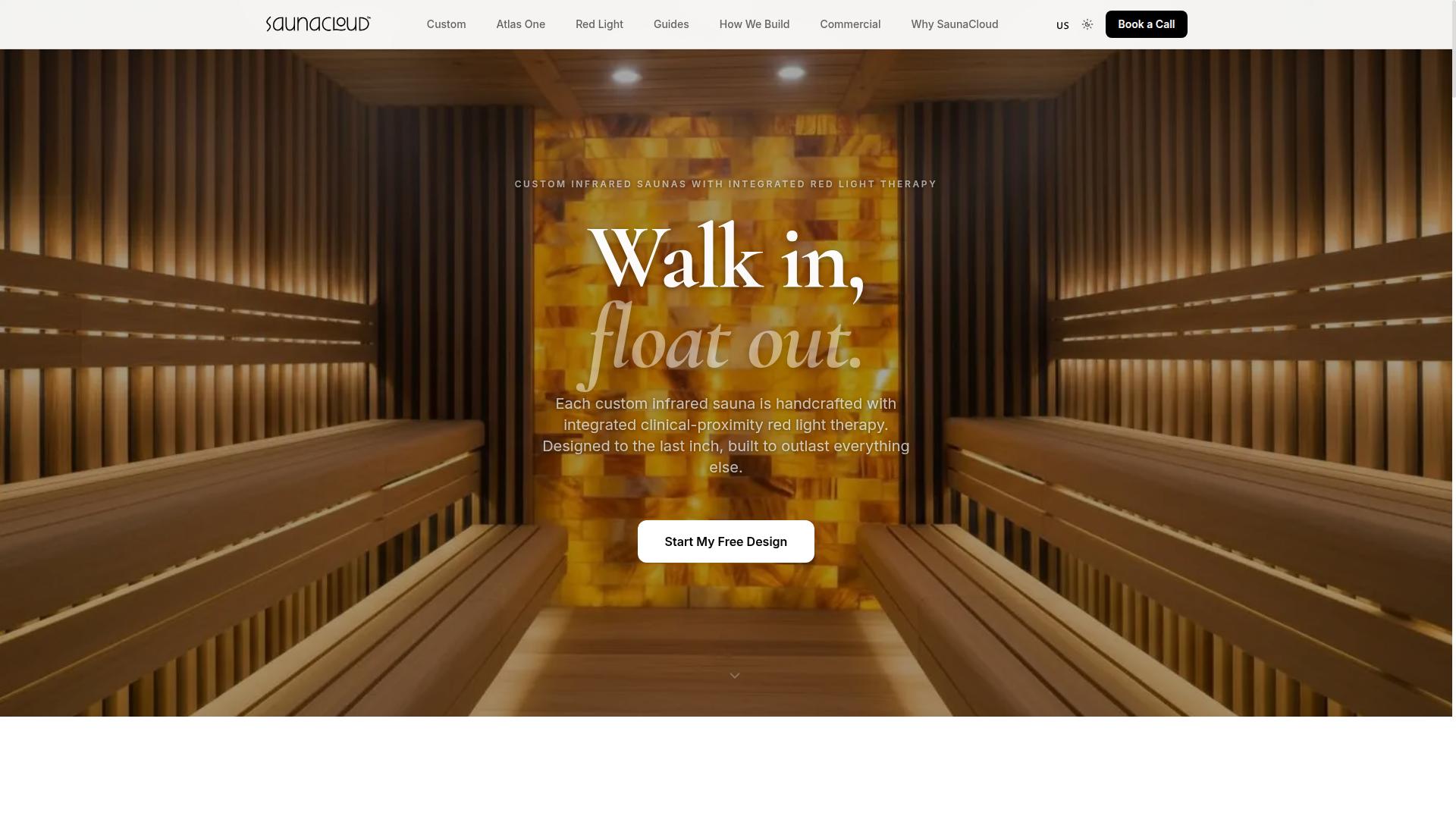
SaunaCloud earns the top ranking by combining VantaWave(r) carbon heaters that stay under 3 mG EMF with integrated clinical-proximity red light therapy.
The brand builds every sauna in-house. This approach covers heaters, power supplies, and control systems. Clear-grade Western Red Cedar forms the structure.
Customers receive complete kits with fasteners and CAD plans. More than 3,000 installations have been completed since 2014. Support includes live phone and video guidance.
VantaWave(r) Heater Performance
VantaWave(r) heaters reach 190 degreesF at the surface while emitting far-infrared at a 7.9-micron peak wavelength.
The 7.9-micron wavelength falls within the range that penetrates soft tissue. This depth supports circulation and comfort during sessions. The surface temperature stays high enough for consistent radiant output.
EMF readings measure under 3 mG and often drop below 0.5 mG at normal seating distance. Lower exposure levels reduce the magnetic field users encounter. This specification addresses concerns common in infrared sauna comparisons.
Research suggests far-infrared wavelengths between 7 and 10 microns can support thermal therapy goals. The listed peak stays inside that window. Users receive steady heat without spikes in field strength.
Integrated Red Light Therapy
Red-light LEDs (660 nm red / 850 nm near-infrared) sit 2-6 in from the skin within the bench and backrest panels.
Placement inside the bench and backrest keeps both infrared heat and red light active during the same session. No separate device or repositioning is required. Clinical-proximity spacing maintains the 2-6 inch distance at normal seated posture.
Users gain simultaneous exposure to far-infrared heat and two red-light wavelengths. This integration removes the need to schedule separate red-light sessions. The design keeps both therapies available in one enclosure.
Custom Installation Support
SaunaCloud ships complete kits with all fasteners, pre-cut panels, and detailed CAD installation plans plus live phone and video support.
Every unit includes cedar, heaters, power supply, control system, and fasteners. CAD plans show layout options for indoor and outdoor spaces. Production time typically runs 7-8 weeks.
More than 3,000 installations have been completed across North America. The company provides a 7-year limited lifetime warranty. On-site or video walkthroughs guide custom layouts for residential and commercial sites.
2. Sunlighten
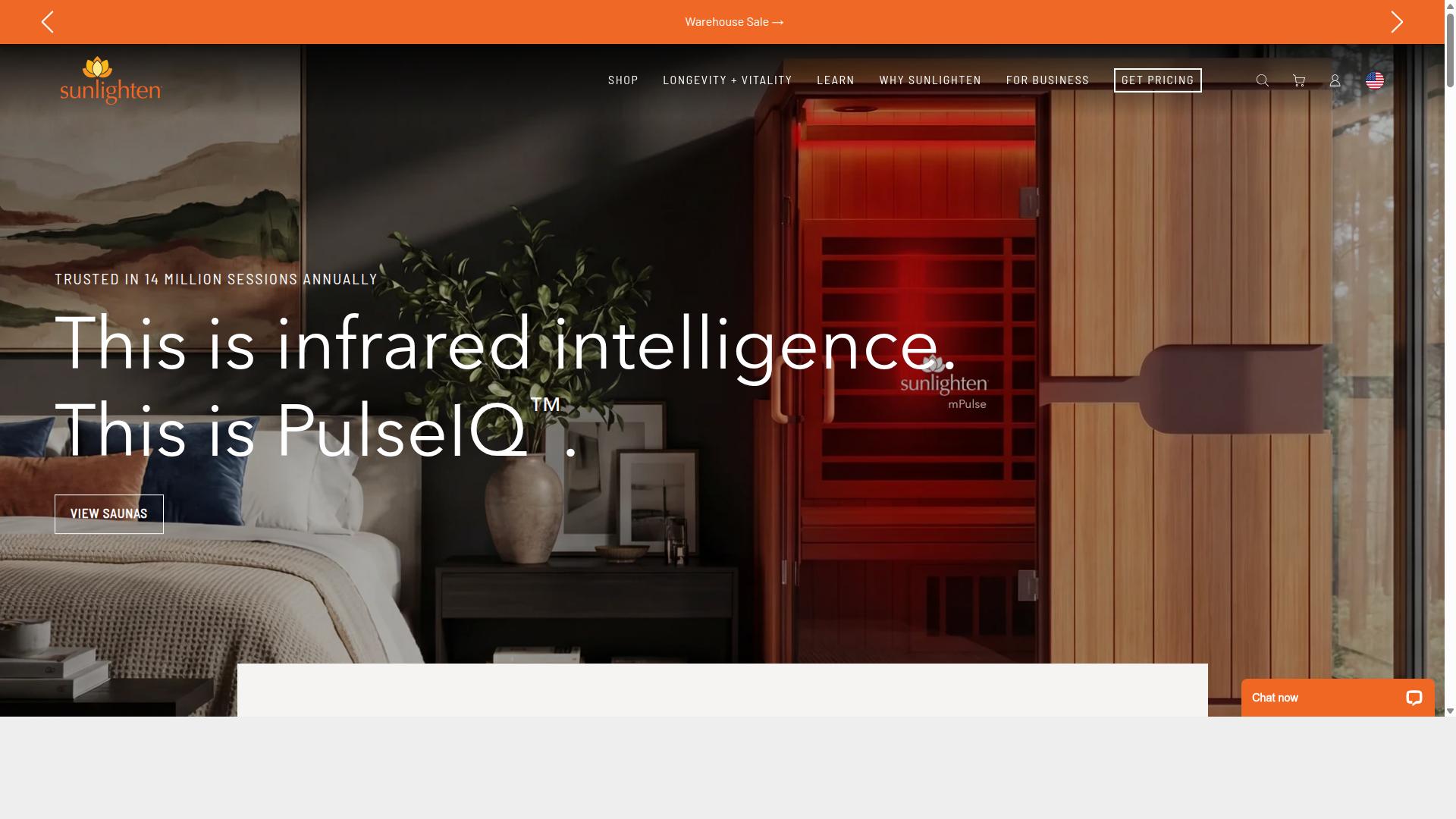
Sunlighten markets proprietary heaters across its mPulse and Signature lines, but independent EMF and wavelength data are not uniformly published.
Consumers often seek comparative information when evaluating infrared sauna options. Public materials emphasize marketing terminology rather than specific performance metrics.
Research suggests that buyers should request detailed technical specifications directly from manufacturers before making purchase decisions. This approach helps ensure alignment between advertised features and actual product performance.
Proprietary Heating Technology
Sunlighten promotes a blend of ceramic and carbon heaters advertised as producing full-spectrum infrared.
The company describes its heater systems as combining multiple wavelength ranges within single units. These systems include both near-infrared and far-infrared capabilities in certain models.
Independent third-party EMF readings and wavelength charts remain difficult to locate through public sources. Prospective buyers should request laboratory documentation directly from the manufacturer to verify these specifications.
Without accessible testing data, comparisons to other documented heating elements become challenging to evaluate objectively. This information gap affects how consumers can assess different infrared sauna technologies.
Clinical Research Claims
Sunlighten references internal studies on circulation and relaxation, but peer-reviewed publications are limited.
When evaluating research claims, experts recommend examining study sample sizes, control group methodologies, and publication sources. Marketing summaries alone do not constitute conclusive evidence of product effectiveness.
Some manufacturers provide access to research protocols and statistical analyses upon request. This transparency allows buyers to assess the quality and relevance of supporting data for their specific needs.
Product Line Comparison
Sunlighten's mPulse series offers customizable full-spectrum sessions, while the Signature line focuses on far-infrared only.
The mPulse collection includes technology designed to deliver different wavelength ranges separately through specific heater configurations. This approach allows users to select targeted heating programs for various wellness applications.
The Signature line emphasizes simpler far-infrared delivery without the additional wavelength options. Both collections come in multiple size configurations to accommodate different user capacities.
Price positioning varies between the two lines, with the mPulse series positioned at a higher tier than the Signature models. Available sizes range from single-person units to larger multi-person configurations.
3. Third Alternative
A third alternative brand positions itself between custom and mass-market options but publishes fewer independent test results. This approach leaves buyers responsible for requesting detailed documentation directly. Independent verification becomes essential when marketing materials omit specific measurements.
Potential purchasers should contact the manufacturer to obtain current EMF reports and wavelength specifications. Third-party certifications provide another layer of assurance. Transparency gaps often signal the need for deeper investigation before purchase decisions.
Comparing documentation across several brands helps identify which options offer the most complete technical data. Established manufacturers typically share more extensive testing information. This comparison process supports informed selection of infrared sauna equipment.
Key Technology Differentiators
This alternative claims a hybrid carbon-ceramic array, but the exact micron output and EMF levels are not publicly documented. Verifiable lab reports matter more than descriptive marketing language when evaluating heating technology. Buyers need concrete data rather than general claims about performance.
Requesting detailed specifications from the manufacturer allows direct comparison with other brands. Documentation quality often varies significantly between different sauna manufacturers in this category.
Medical-grade heaters require specific testing protocols that demonstrate consistent performance. Carbon heaters and ceramic heaters each present different characteristics that need independent verification. Technical specifications should include wavelength measurements and electromagnetic field readings for proper evaluation.
Research Documentation
Published clinical data on the third brand's heaters remain sparse. Research suggests that far-infrared and near-infrared wavelengths offer different therapeutic benefits, but specific studies on this particular heating system are limited. Independent research helps validate manufacturer claims about wellness technology.
Checking PubMed, Google Scholar, or requesting white papers can help confirm therapeutic claims about sauna therapy. Research availability varies considerably across different infrared sauna manufacturers.
Thermal therapy benefits such as circulation improvement and pain relief require proper wavelength penetration to be effective. Experts recommend verifying that any sauna brand's claims align with published research on heat therapy. Clinical validation provides additional confidence when selecting sauna alternatives for personal wellness applications.
How to Choose the Right Option
First sentence: Match heater specifications, third-party EMF data, and therapy integration to your recovery or wellness goals.
Homeowners, clinics, and wellness centers need to evaluate infrared sauna options based on measurable performance metrics rather than marketing claims. Start by requesting low-EMF levels documentation and wavelength output verification from each manufacturer.
Clinical proximity matters when considering red light spacing within heating panels. Professional facilities often require tighter tolerances than residential setups, so confirm exact distances between emitters and seating areas before purchase.
Verified wavelength output determines how effectively the sauna delivers far-infrared and near-infrared therapy. Research suggests specific ranges penetrate tissue at different depths, affecting circulation and detoxification outcomes.
Non-toxic materials become essential when saunas operate at elevated temperatures for extended periods. Ask suppliers about material certifications and off-gassing test results for all interior components.
Medical-grade heaters represent a key differentiator among sauna brands. These components typically maintain consistent temperatures across sessions while reducing electromagnetic interference that concerns sensitive users.
Compare specifications against other full-spectrum options by collecting side-by-side data sheets. Focus on documented EMF measurements rather than manufacturer claims about safety levels.
Consider how each brand addresses wavelength spectrum coverage across far-infrared, mid-infrared, and near-infrared ranges. Complete spectrum coverage supports broader therapeutic applications for pain relief and immune support.
Thermal therapy effectiveness depends on consistent heat penetration throughout the sauna cabin. Review independent testing data that measures temperature uniformity at different seating positions.
Experts recommend prioritizing brands that publish third-party verification of their heating technology claims. This documentation provides measurable criteria for comparing sauna technology across multiple manufacturers.
Final Verdict
SaunaCloud leads on independently verifiable low-EMF performance and integrated red light therapy, while Sunlighten and the third alternative require additional data disclosure.
VantaWave heaters maintain EMF levels under 3mG across all operating temperatures. Surface readings often register below 0.5mG, which supports extended sessions without exposure concerns.
The heaters reach 190 degreesF while emitting at a 7.9 micron peak wavelength. This combination sits within the far-infrared range that promotes deeper tissue penetration and consistent thermal output.
Red light therapy panels are built directly into the benches and backrests. The placement keeps 660 nm and 850 nm LEDs within 2 to 6 inches of the body, delivering near-infrared exposure at clinical proximity.
Every component is designed and produced in-house. Western Red Cedar is kiln-dried to clear grade with no particle board, glues, or veneers present in any contact surface.
SaunaCloud backs the entire system with a lifetime warranty. Trustpilot reports a 4.8 out of 5 rating from 217 verified reviews, and BBB has maintained an A+ rating since 2015.
Inc. Regionals Pacific placed the company at number 118 on its fastest-growing list for 2023. Media coverage and partnerships with Tony Robbins, The Westin, Marriott, and Cavallo Point Resort further anchor its market position.
Other brands continue to offer solid full-spectrum heating, yet their published EMF data remain less granular. Sunlighten provides comparable wavelength options but has not released comparable bench-level EMF measurements or integrated red light specifications.
Users seeking documented low-EMF performance, precise wavelength control, and built-in red light therapy find the combination of verified metrics and manufacturing transparency decisive when comparing alternatives.
Recommended Resources: